Aug 2024 – Jan 2026

Finding the right restaurant, not just the nearest one.

Naviresto let people filter restaurants by ambiance, diet, halal options, budget and more, then ranked the best matches. I built it end to end: web, mobile, backend, data and AWS.

Next.jsReact NativeExpoNode.jsPythonPostgreSQLAWS
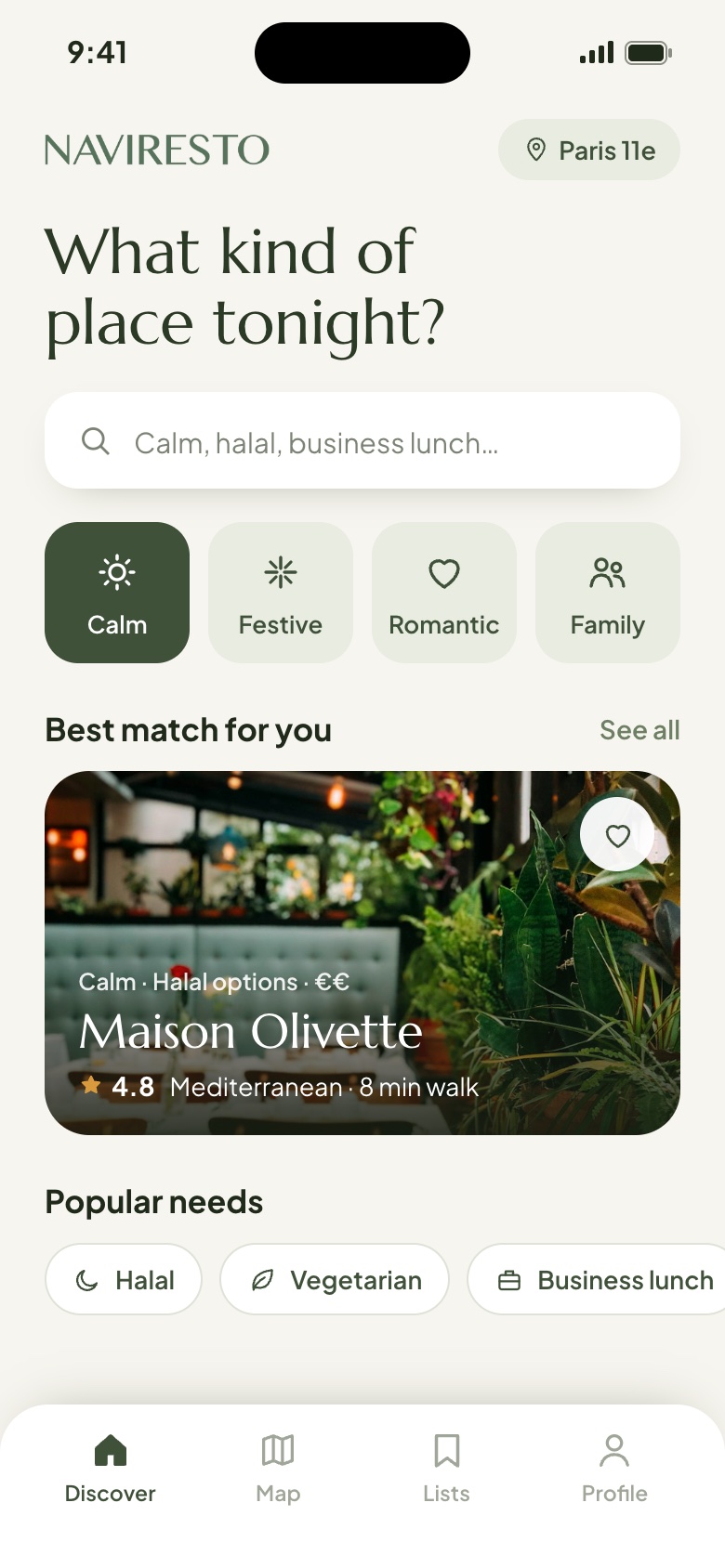
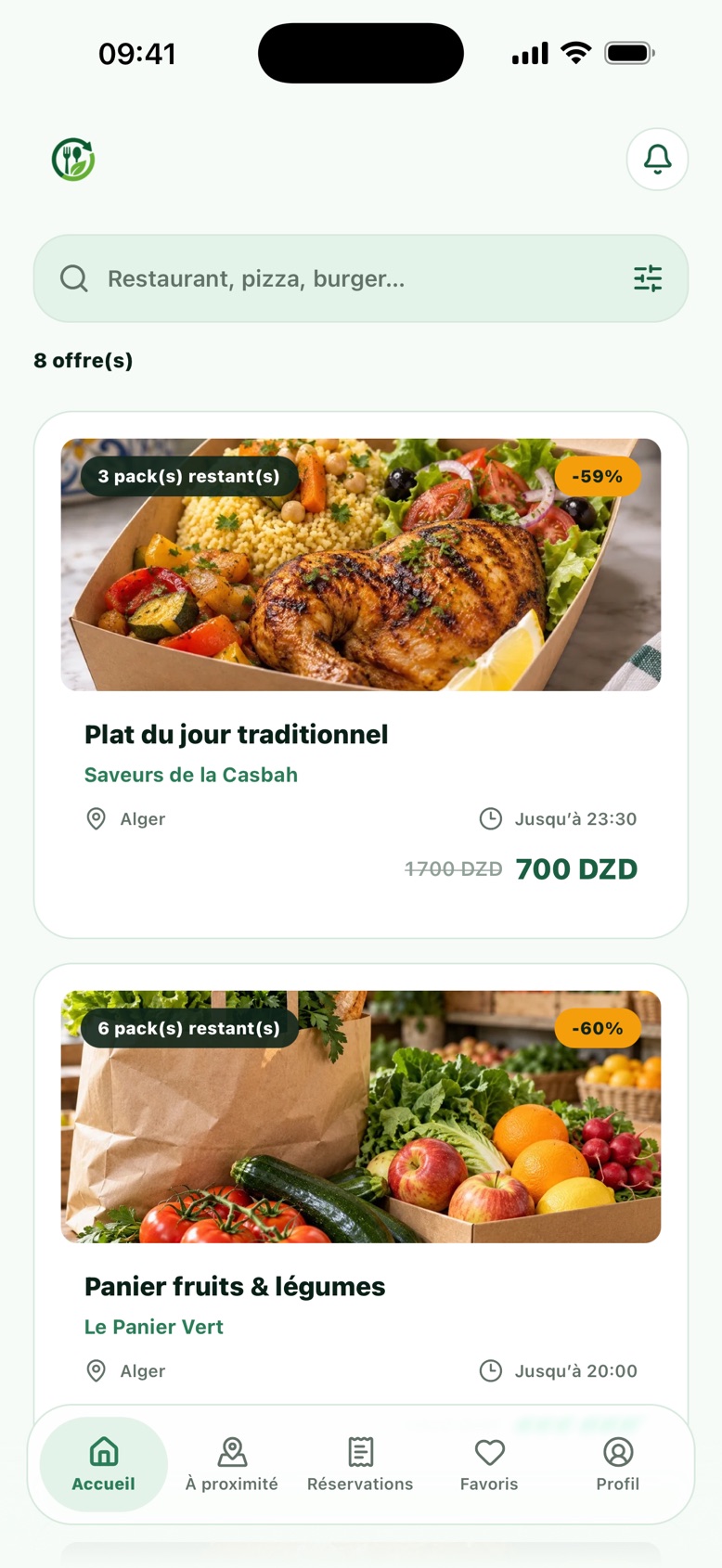
Naviresto discover screen (redesign)
Search byMood · diet · budget
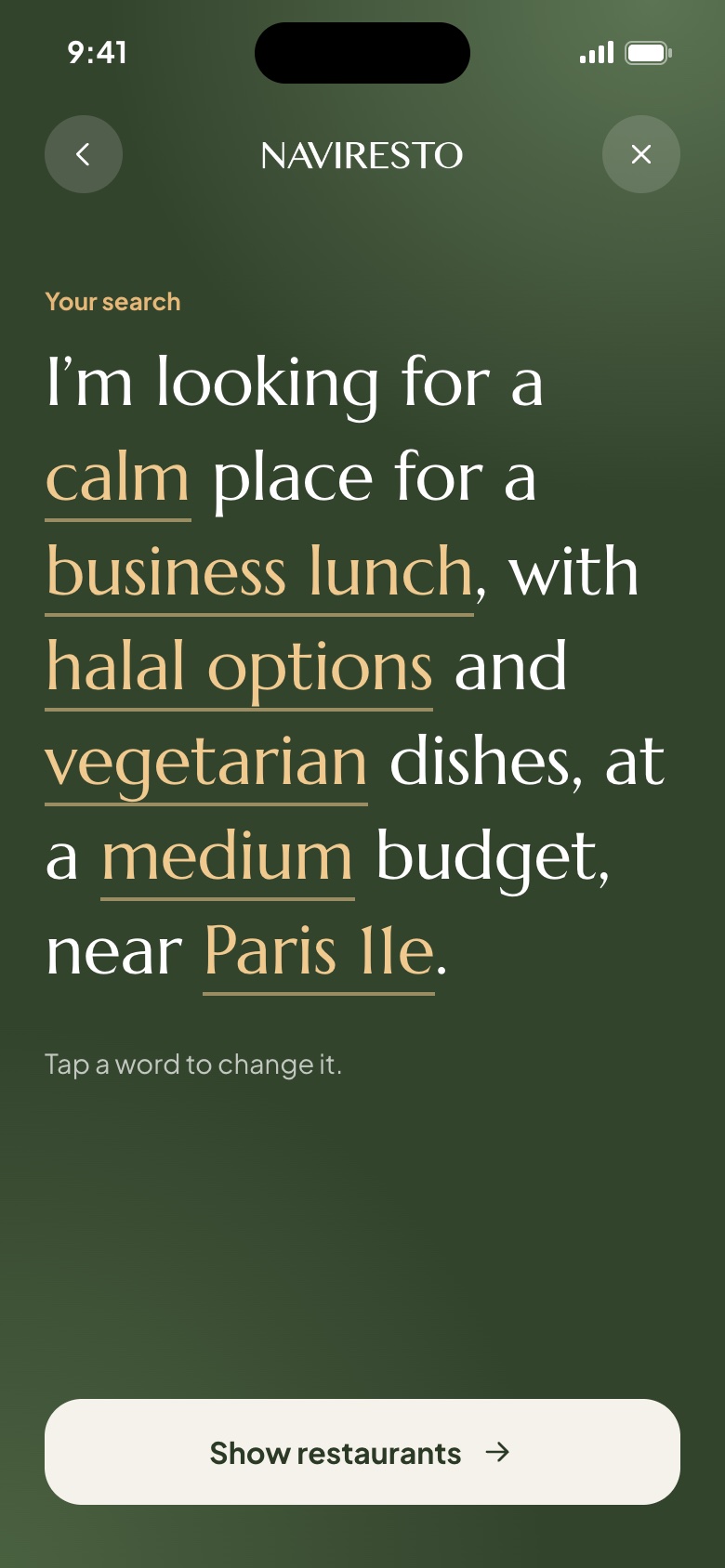
Naviresto search as a sentence (redesign)
Restaurant dataUpdated weekly

Redesigned for this case study · sample data

The challenge

Build a restaurant database detailed enough to filter by ambiance, diet or halal options, not only by cuisine and distance.

What I built

The web app, the iOS and Android app, the admin and leads dashboards, the backend, the weekly data ingestion and the AWS infrastructure.

The result

A complete platform in production: a web app, an app on the App Store and Google Play, and restaurant data refreshed every week.

More filters than a map, and a ranking on top.

A map answers “what is near me?”. Naviresto was made for a more precise question: a calm place for a business lunch, a halal restaurant with a festive ambiance, a vegetarian menu within my budget. The idea was to offer as many useful filters as possible, then rank the best restaurants using those filters and their reviews.

I was the only developer. I chose the architecture and built the Next.js web app, the React Native / Expo mobile app, the backend and its APIs, the database and the data pipelines. I also worked on two Next.js dashboards: one to manage the platform, and one designed to sell monthly access to the restaurant data, with filters, to customers looking for restaurant leads. I ran the AWS infrastructure and published the app on both stores.

From the first architecture decision to a platform running in production on web, iOS and Android.

Services performed

  • Architecture & technical decisions
  • Web app (Next.js)
  • Mobile app (React Native / Expo)
  • Admin & leads dashboards (Next.js)
  • Backend services & APIs
  • Data ingestion (Python)
  • AWS infrastructure & CI/CD
  • App Store & Google Play releases

Tech stack

Next.jsReact NativeExpoTypeScriptNode.jsPythonPostgreSQLAWS EC2AWS LambdaAmazon S3DockerCI/CDAI APIs
Discover (redesign)
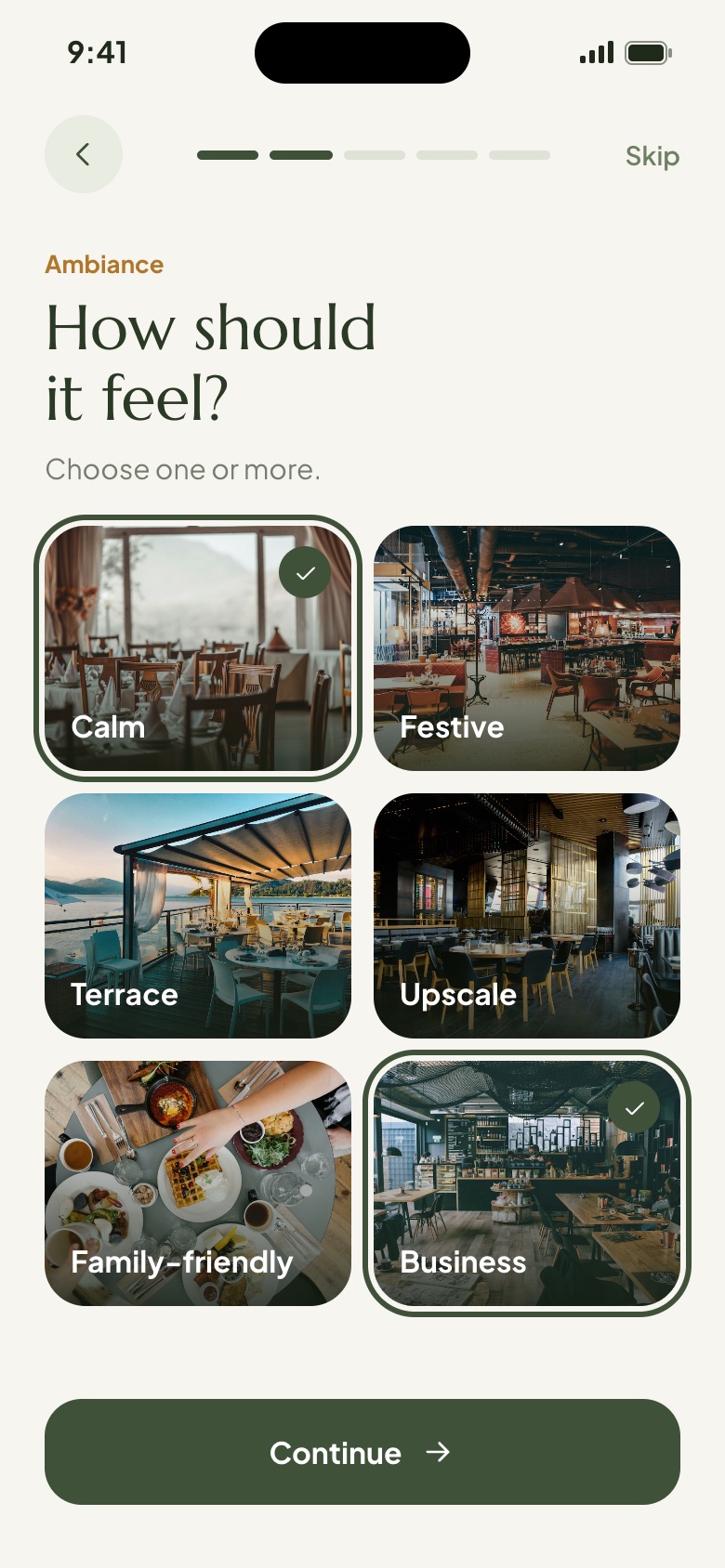
Ambiance (redesign)
Search as a sentence (redesign)
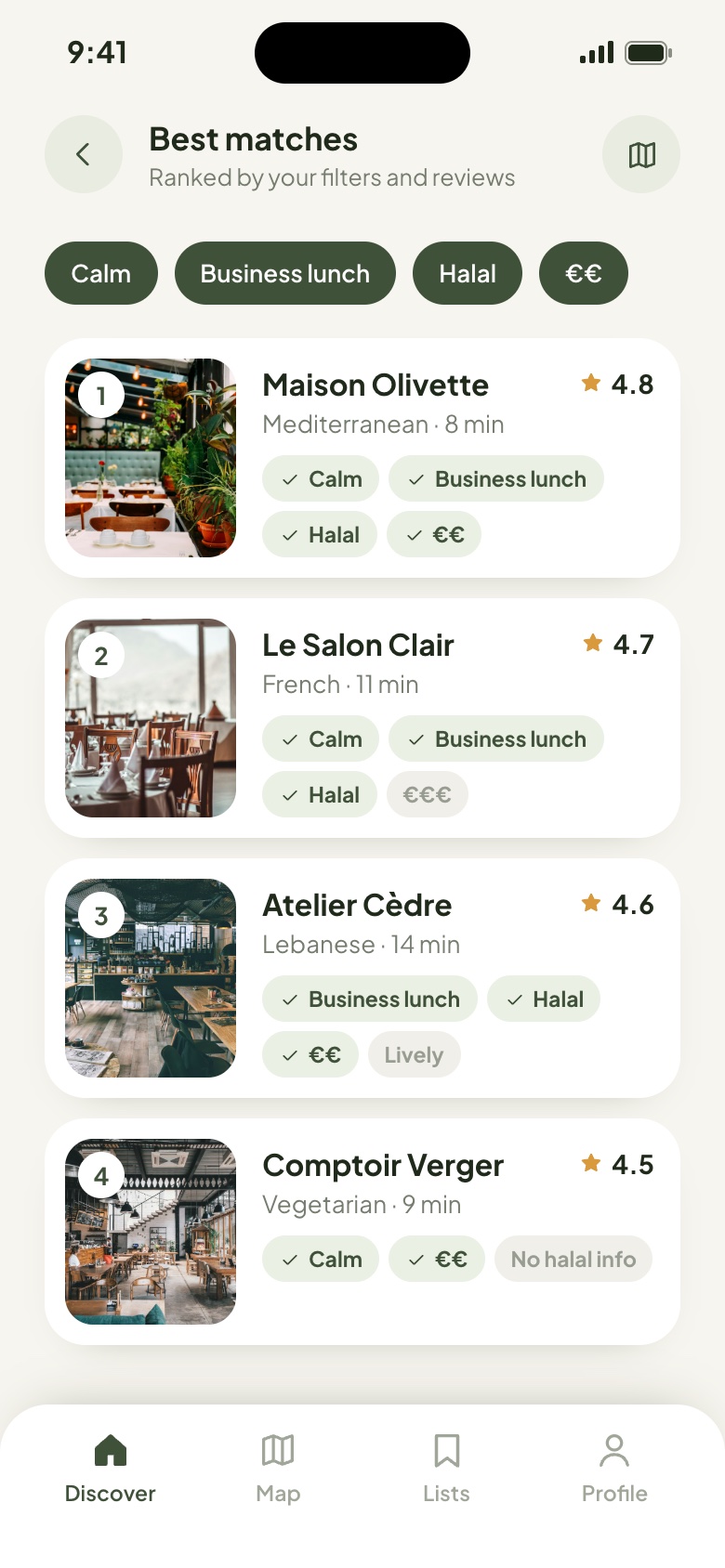
Ranked results (redesign)
Restaurant page (redesign)
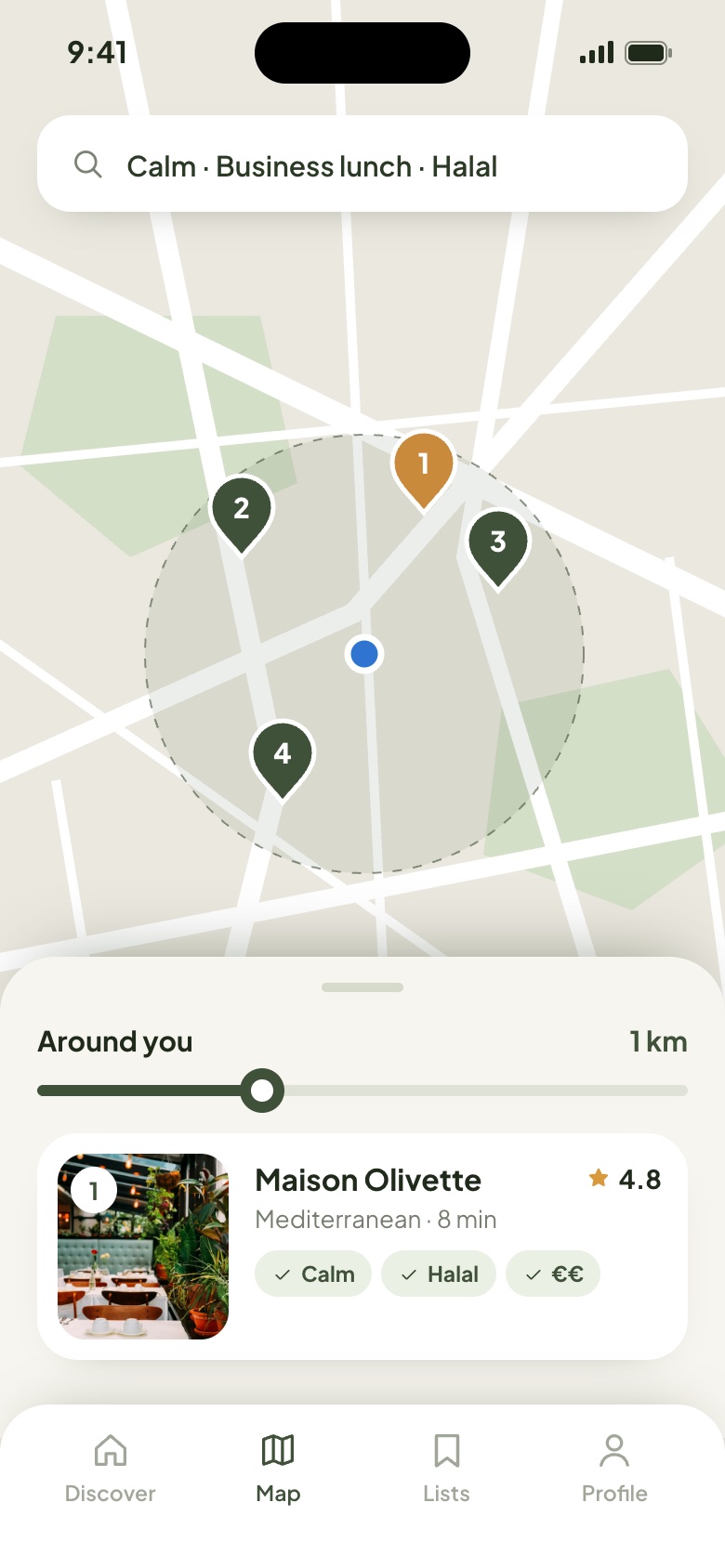
Map (redesign)
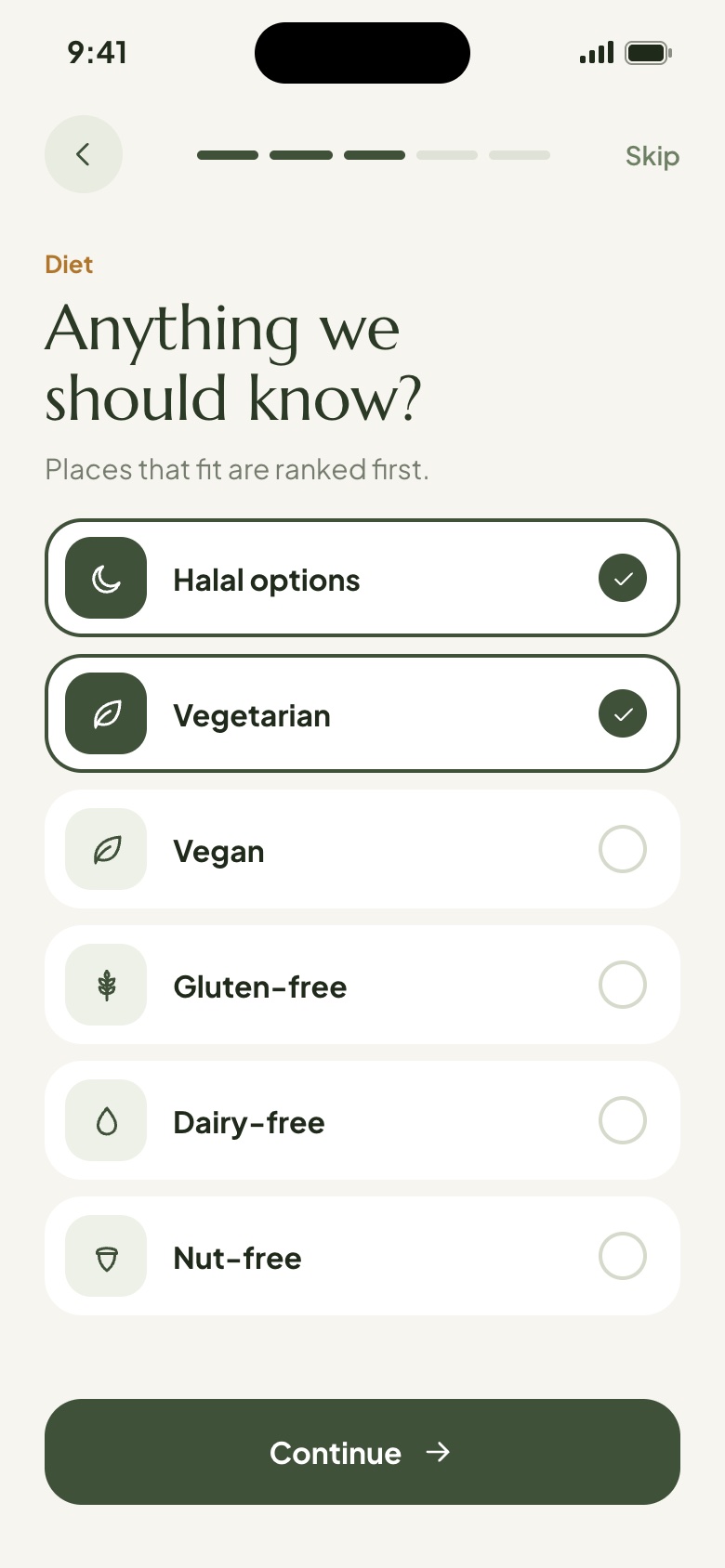
Diet (redesign)
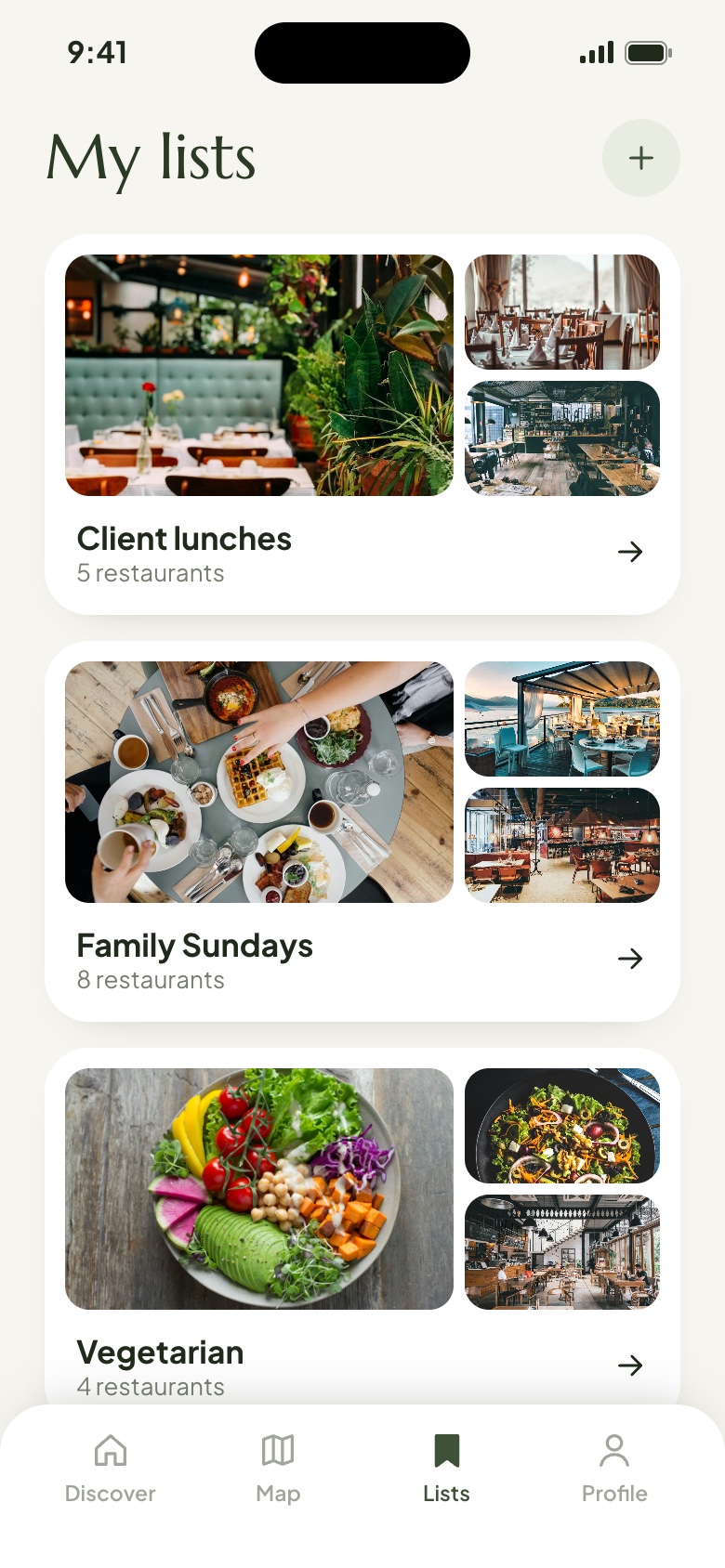
Lists (redesign)

Redesigned for this case study, with sample data. The released app (2024–2026) had a different interface.

The challenge

A filter is only as good as the data behind it.

Anyone can add a “halal” or “business lunch” button. It only works if every restaurant has that information, in the same format, and if it stays up to date. So the real product was the database: collecting restaurants, filling in all their fields and making them searchable on web, iOS and Android.

01A database with the fields maps don’t focus on
02Many filters, still simple to use
03One developer for every part

Architecture

From raw restaurant data to ranked results.

Two paths meet in the database: users searching through the API, and the weekly job that feeds it. AI stays on the data side. The numbers point to the stories below.

AWS computeEC2 · LambdaWeb appNext.js · TypeScriptMobile appReact Native · ExpoDashboardsNext.js · Admin, leadsExternal APIsIncluding Google MapsAI servicesData side onlyBackend on EC2Node.js · TypeScript · RESTsearchfiltersrankingfavoritesaccountsIngestion on LambdaPython · runs every weekPostgreSQLRestaurants and their fieldsAmazon S3Uploaded filesRESTCI/CD + Dockerbuildsdeploys24315

Simplified view, based on my own work.

In practice

Five problems, and how I solved them.

The problem, what I did, and what it made possible.

1

Data · the hardest part

Building a restaurant database with all the fields

The problem
To filter by ambiance, diet or halal options, each restaurant needs far more than a name and an address. Building that database was the hardest part of the project.
What I did
I built ingestion pipelines in Python that collected restaurants from several external APIs and Google Maps, then used AI to enrich the listings. The ingestion ran on AWS Lambda every week, so the data was refreshed regularly.
What it changed
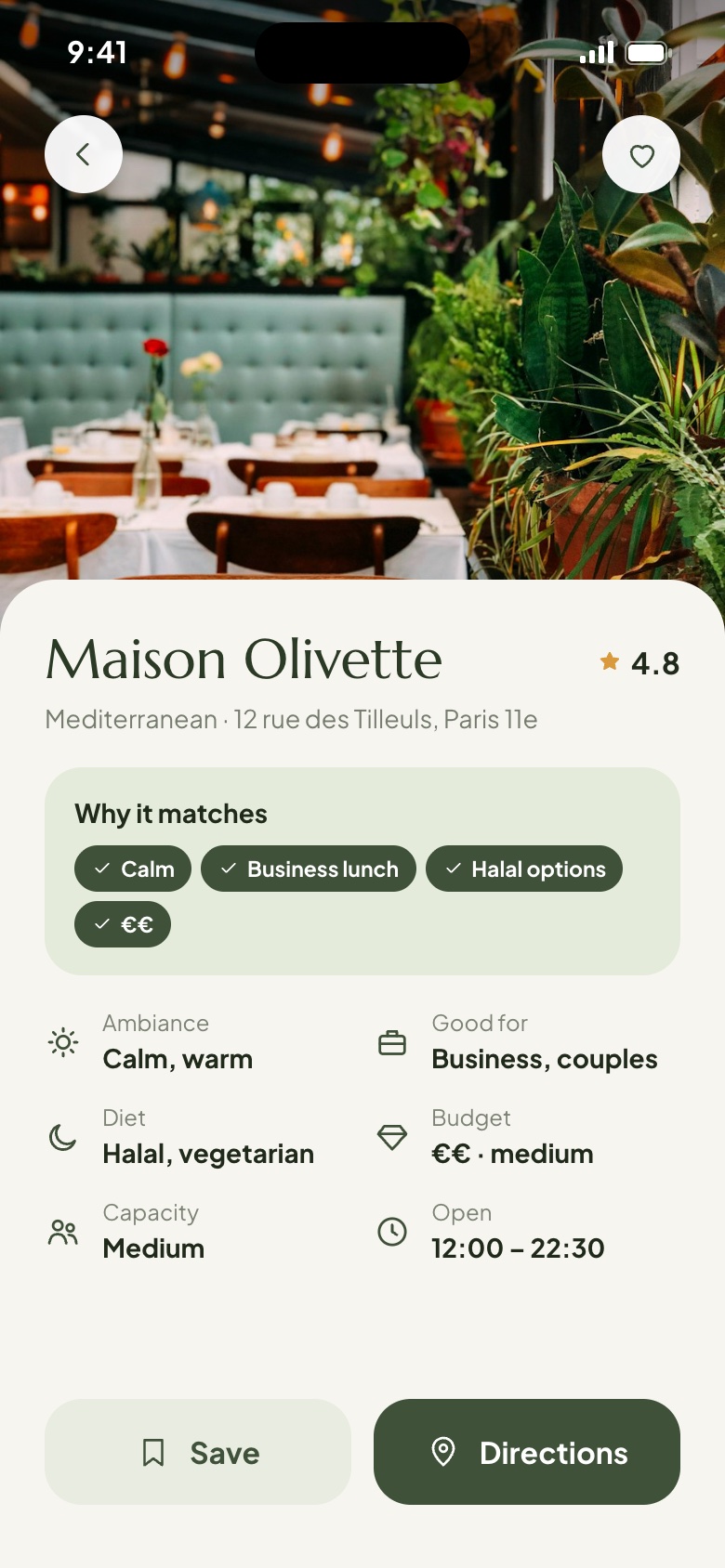
Each restaurant could be described by fields people can filter on: ambiance, budget, cuisine, capacity and dietary options, next to its address and rating.
  1. Collect
  2. Enrich with AI
  3. Store in PostgreSQL
  4. Refresh every week
Discover screen (redesign)
Restaurant page with its fields (redesign)
2

Mobile · user experience

Many filters, without one long form

The problem
The goal was as many filters as possible. Put on one page, they become a form nobody wants to fill in.
What I did
I built search as short steps: choose a place, then answer one question per screen, such as dietary restrictions, with the option to skip. The app then shows the choices as a sentence the user can read.
What it changed
Users can be precise when they want to, skip what does not matter, and check their search in plain words.
  1. Choose a place
  2. Answer or skip
  3. Read the summary
  4. See results
Ambiance step (redesign)
Diet step (redesign)
Search as a sentence (redesign)
3

Backend · search & performance

Ranking the best match first, with no AI in the app

The problem
A list of restaurants that match is not an answer yet. With several good options, the order decides what people see.
What I did
I built the search and filter APIs and a ranking based on filters and reviews. AI and data analysis were used on the data side, not in the app: the app only called the API.
What it changed
Restaurants that fit the request and are well reviewed come first. Keeping AI out of the app also kept it light: no user waits for a model to answer.
  1. Data analyzed first
  2. App calls the API
  3. Filters + reviews
  4. Ranked list
Ranked results (redesign)
Results on a map (redesign)
4

Web · dashboards · Next.js

A second use for the same data

The problem
The restaurant database took the most work, and the app was only one way to use it. The platform also had to be managed.
What I did
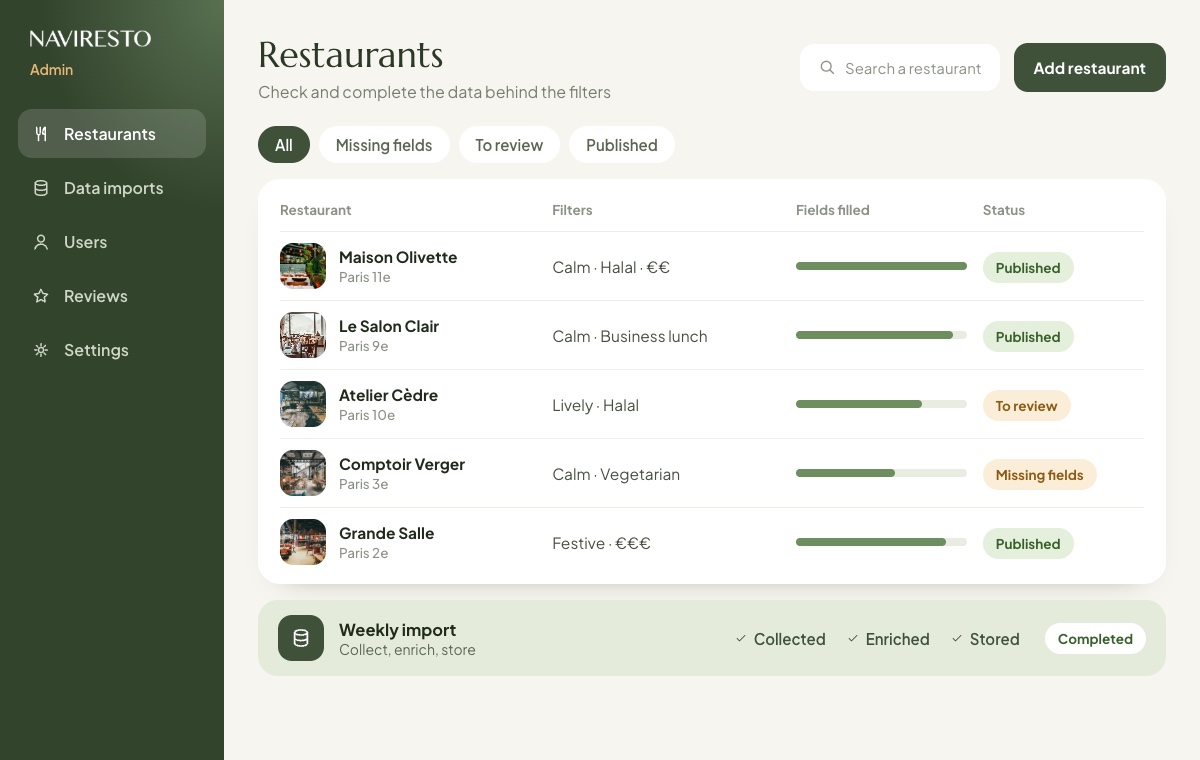
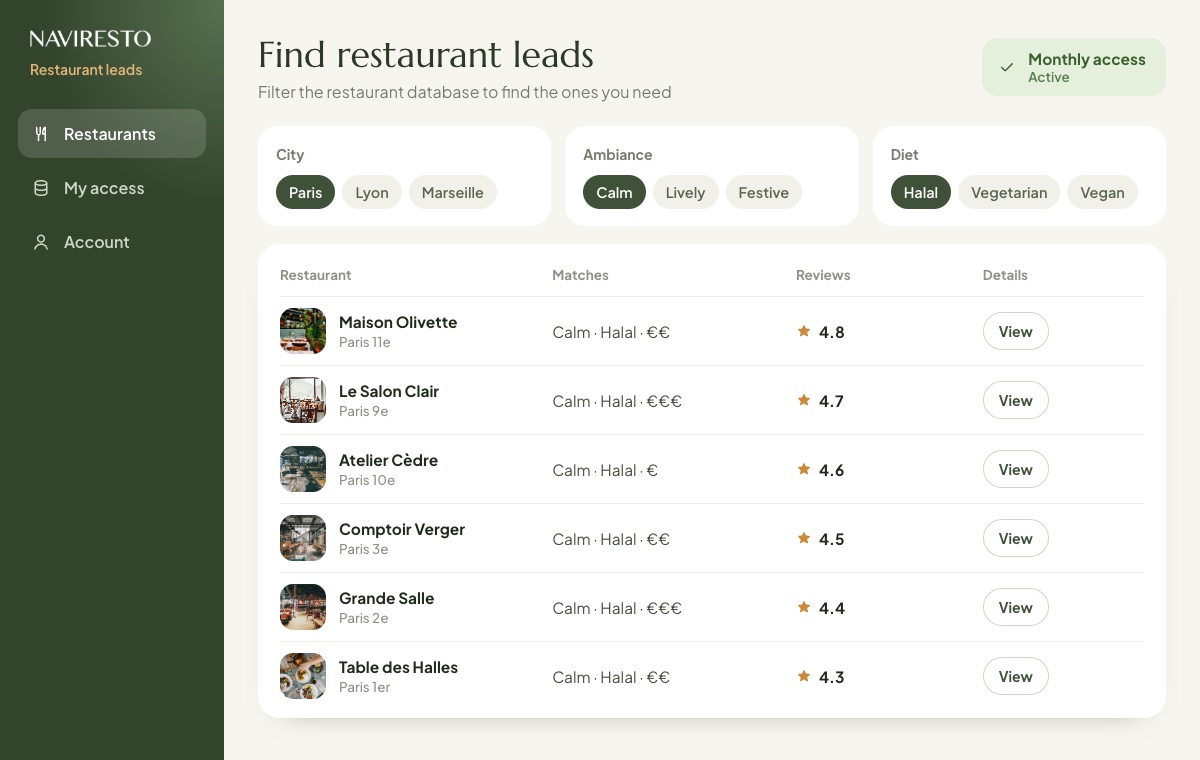
I worked on an admin dashboard to manage the platform, and a leads dashboard for customers looking for restaurants to contact. The idea: pay on the website, get monthly access, and filter the restaurants you need. I used Next.js for both.
What it changed
The same data could serve diners in the app and paying customers on the web. The leads dashboard was finished, but it was never opened to customers.
  1. Pay on the website
  2. Monthly access
  3. Filter restaurants
  4. Find leads
admin
Admin dashboard (redesign)
leads
Restaurant leads dashboard (redesign)
5

Cloud · one developer

Running the whole platform alone

The problem
With one developer, every server, deployment and store release is one more thing to maintain.
What I did
I gave each AWS service a clear job: EC2 for the servers, Lambda for the weekly data ingestion, S3 for uploaded files. Docker and CI/CD handled builds and deployments.
What it changed
One person could keep the web app, the mobile app, the backend and the data running, and keep shipping improvements until January 2026.
  1. Code
  2. CI/CD
  3. EC2 servers
  4. Store releases

Also built

Map view

Restaurants on a map, released in May 2025 together with better data quality.

Favorites and lists

Users save restaurants and group them in their own lists.

Accounts and ads

Sign-up, login and profile, plus AdMob ads to monetize the app.

Screens redesigned for this case study, with sample data. The released app had a different interface.

Timeline

From launch to the last release.

The main steps from the public App Store history.

  1. 1.0

    First version on the App Store. Ads added a week later.

  2. 1.0.4

    Map view and better data quality.

  3. 1.0.10

    Ads reworked to follow AdMob rules.

  4. 1.0.15

    Performance improvements.

  5. 1.0.22

    Last fixes before the project stopped.

Outcome

What I delivered

  • Architecture and technical decisions for the whole product
  • Next.js web app and React Native / Expo app for iOS and Android
  • An admin dashboard, and a leads dashboard with paid monthly access (finished, not launched), in Next.js
  • Backend and APIs: search, filters, ranking, favorites and accounts
  • Weekly Python ingestion on Lambda, with AI for enrichment and ranking data
  • AWS infrastructure (EC2, Lambda, S3) and CI/CD in production
  • Releases on the App Store and Google Play until January 2026
Published, then stopped by the client

Where it is today

The client stopped the project and my work ended in January 2026. The service is offline today. The public App Store page still shows the release history.

The hardest part

The database. The filters were only useful if every restaurant had the right fields, so collecting, enriching and refreshing that data mattered more than any screen.

What I changed in the redesign

I redesigned the screens for this case study: larger choices in each filter step, a search sentence where every word can be changed, and results that show which filters each restaurant matches.