Jul 2026 – PresentOngoing contract

Unsold food, sold before closing time.

RepasGo lets restaurants and bakeries in Algeria sell their unsold food as reduced-price packs. Customers reserve in the app, show a code and pay at the counter. I build both apps, the admin dashboard, the website and a large part of the API.

React NativeExpoReactNestJSPostgreSQLDocker
RepasGo customer app
On the App StoreTwo apps
RepasGo restaurant app
LanguagesFR · AR · EN

Real app · demo data

The challenge

Sell a few packs, in one shop, for a few hours, without card payment and without customers who never come.

What I built

A customer app, a restaurant app, an admin dashboard, a website, and the notifications, emails and scheduled jobs behind them.

The result

Both apps are on the App Store: the customer app since September 2026, the restaurant app since November 2026. Android is next.

A few packs, a few hours, one counter.

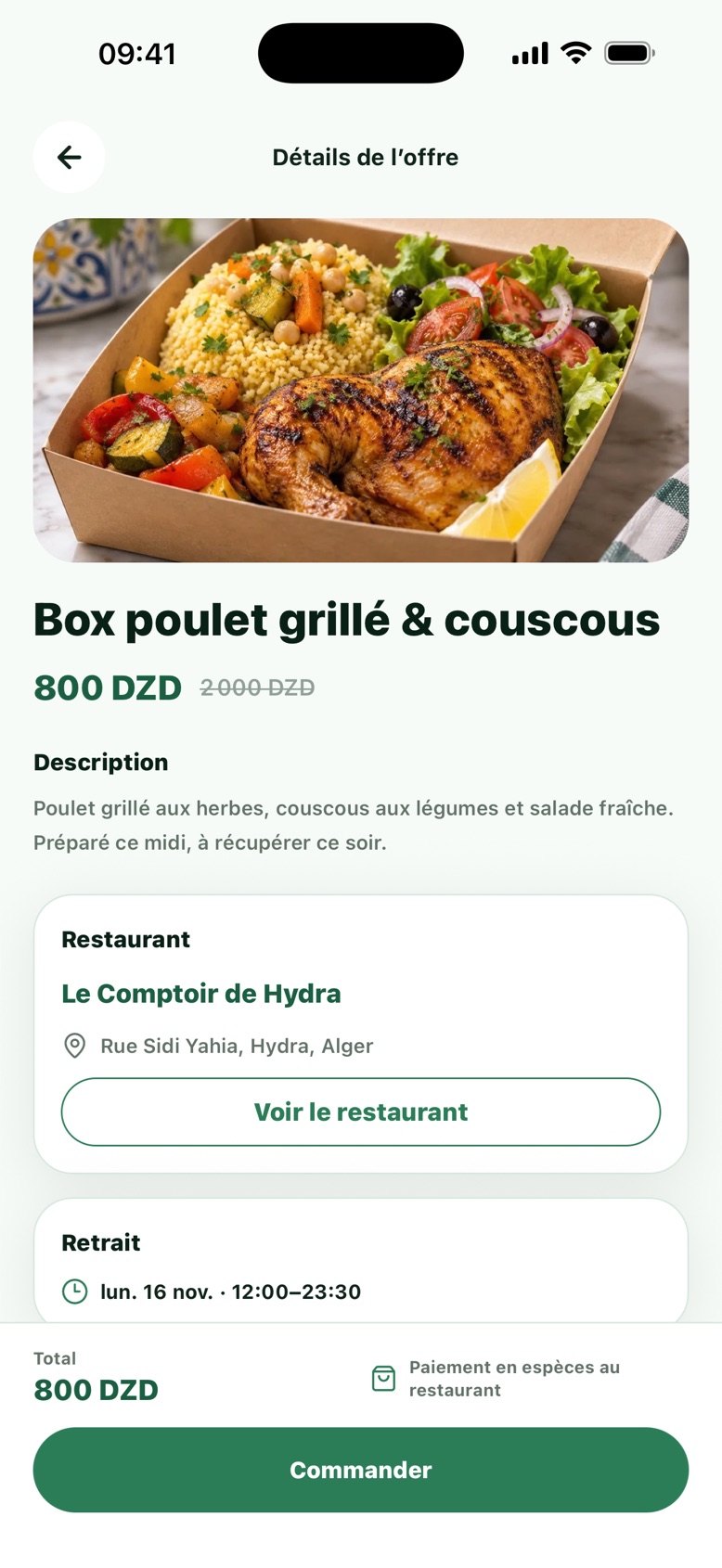
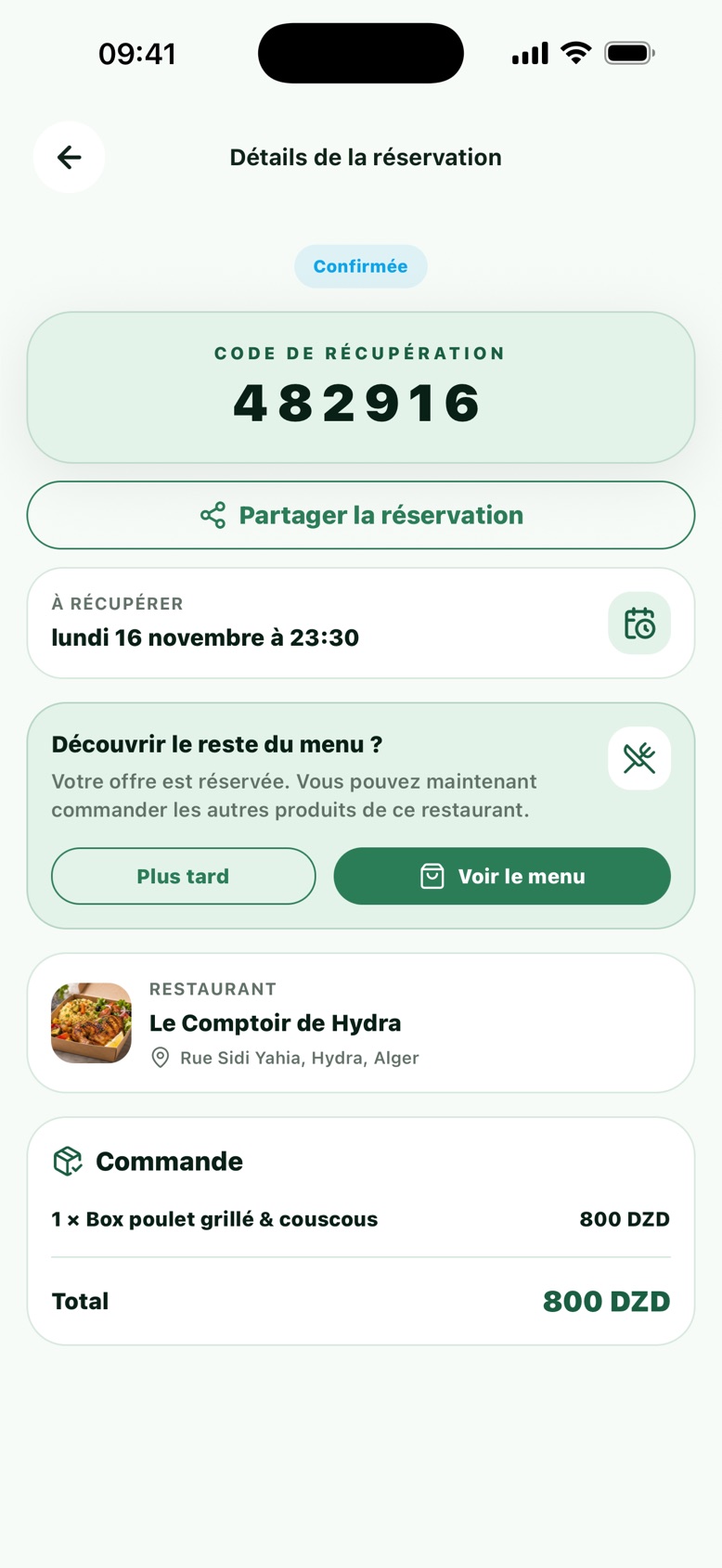
At the end of the day, a bakery or a restaurant has good food left. RepasGo turns it into packs at a reduced price. A customer finds one nearby, reserves it, comes during the pickup time, shows a 6-digit code and pays in cash.

The product has four parts: an app for customers, an app for shops, an admin dashboard for the RepasGo team, and a public website. All of them use one NestJS API with a PostgreSQL database.

We are two developers. I built most of the two mobile apps, the admin dashboard and the website. On the API we share the work: I built notifications, emails, reviews, opening hours, finance, the restaurant onboarding and the scheduled jobs.

From the first commit in July 2026 to two apps on the App Store in November 2026.

Services performed

  • Customer app (React Native / Expo)
  • Restaurant app (React Native / Expo)
  • Admin dashboard (React)
  • Public website (React)
  • Backend features (NestJS, PostgreSQL)
  • Push notifications & emails
  • App Store releases

Tech stack

React NativeExpoReactTypeScriptNestJSNode.jsPostgreSQLDrizzle ORMTanStack QueryDockerExpo PushBrevoApp Store
Packs of the day
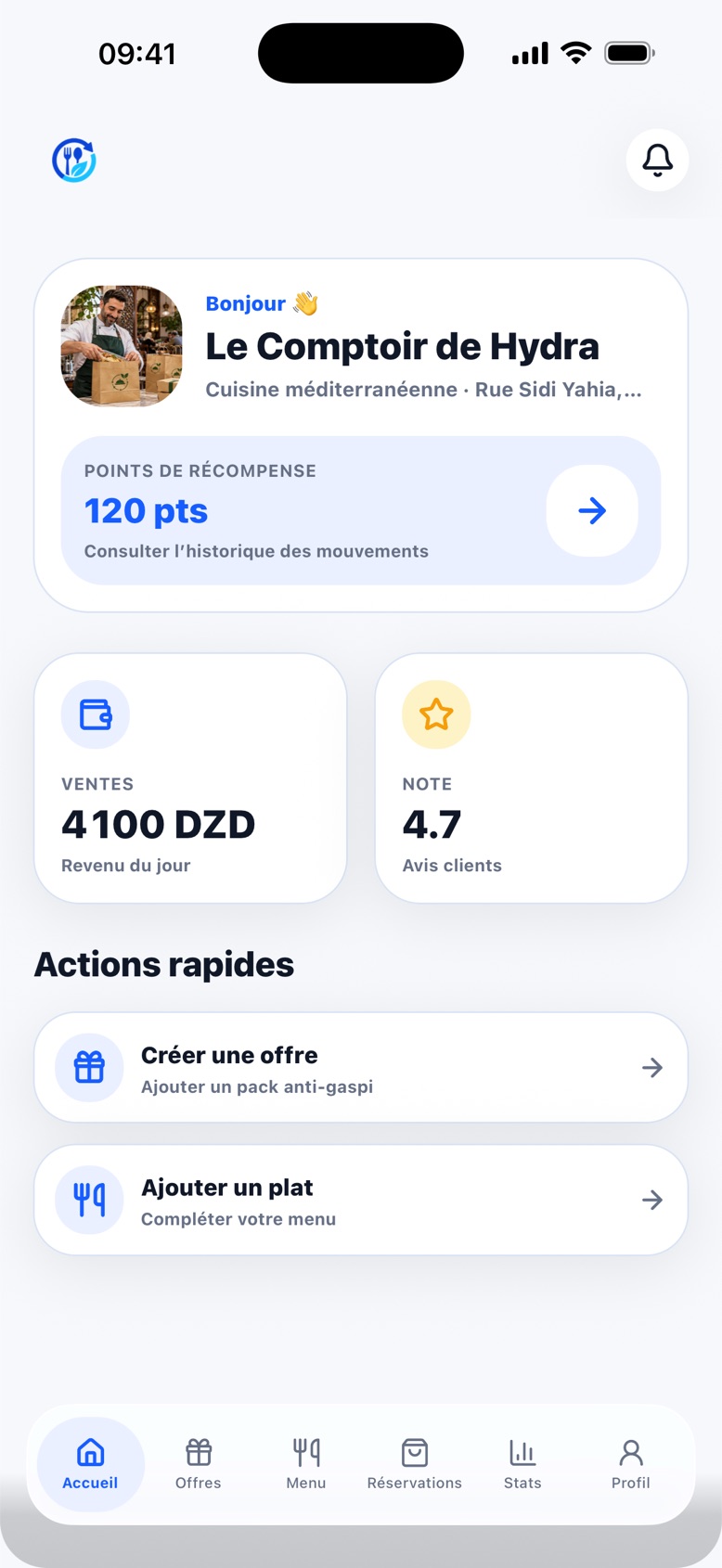
Restaurant home
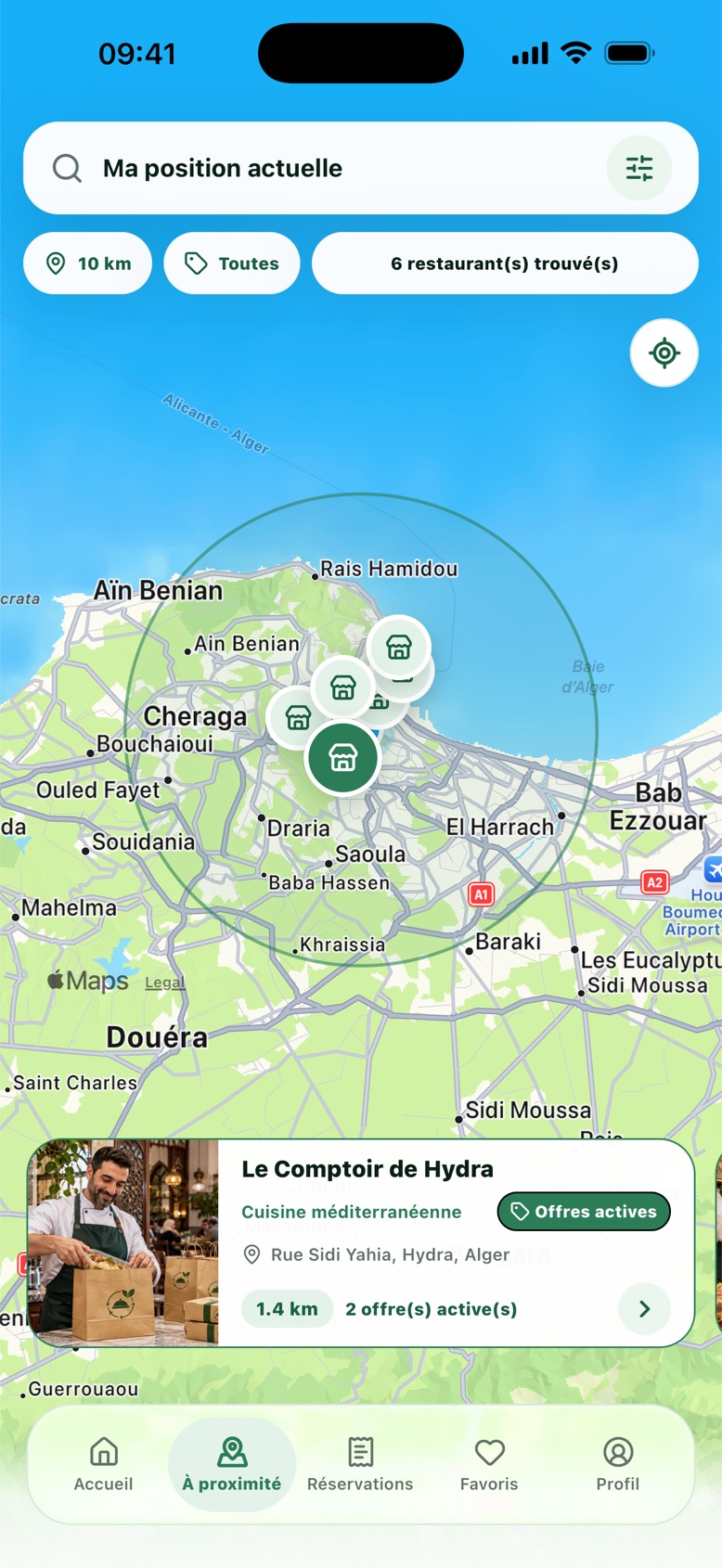
Map
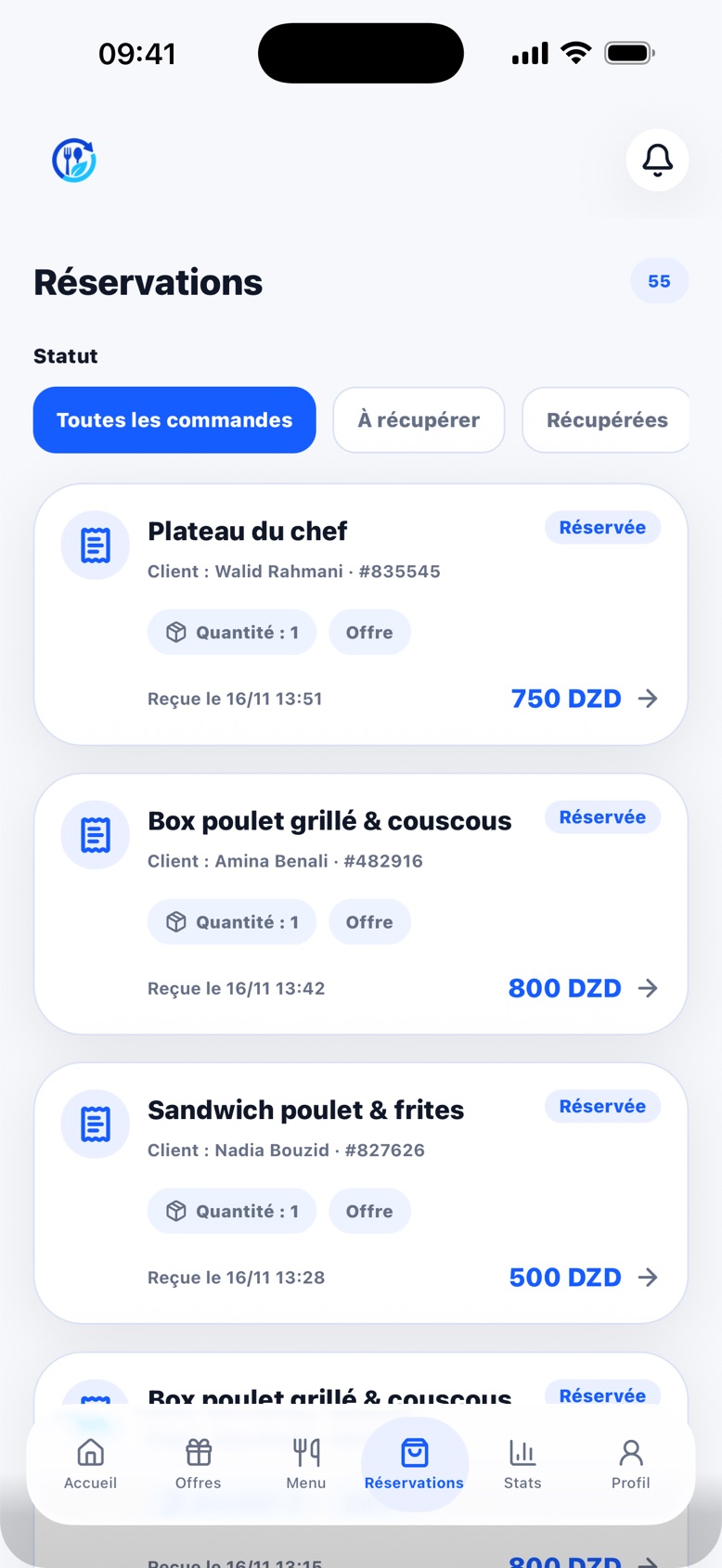
Reservations
Pack details
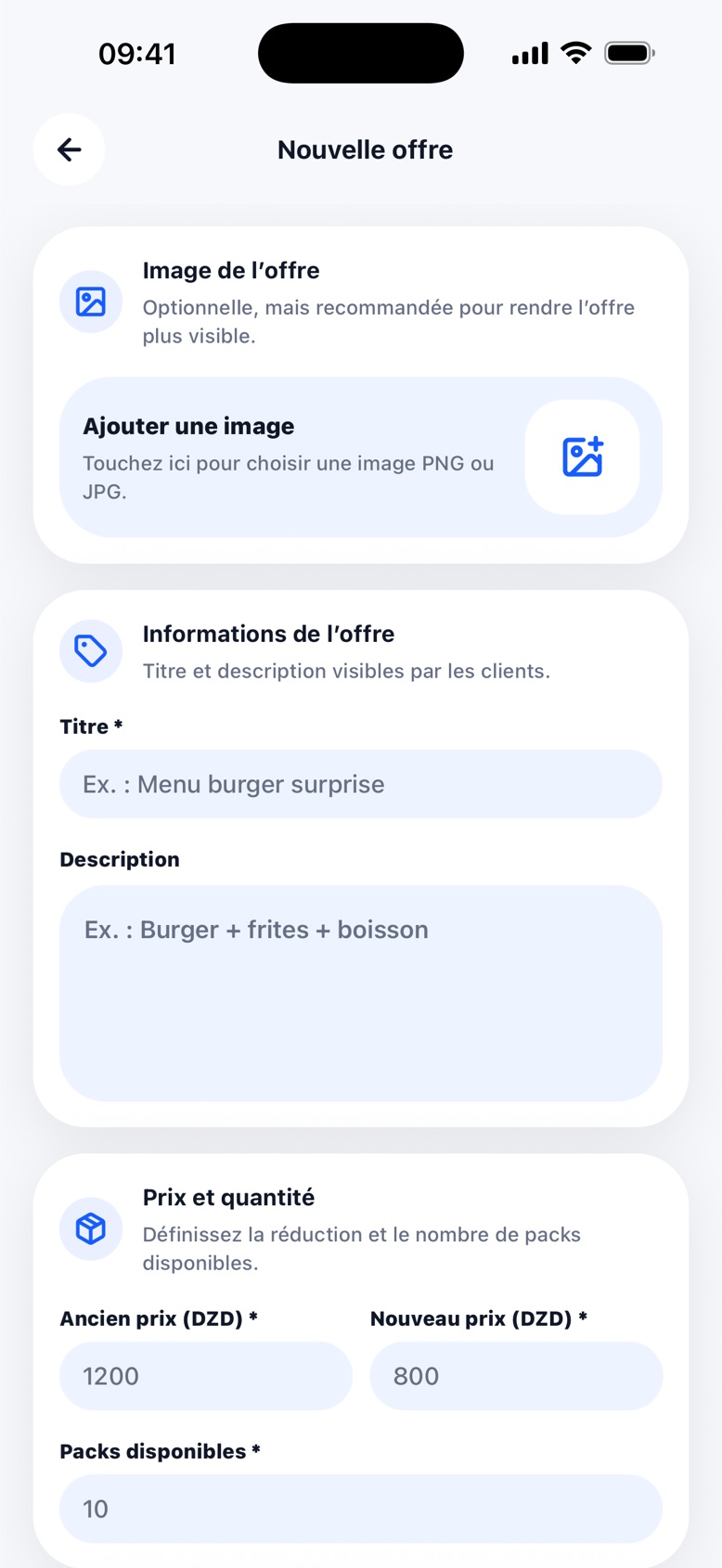
New pack
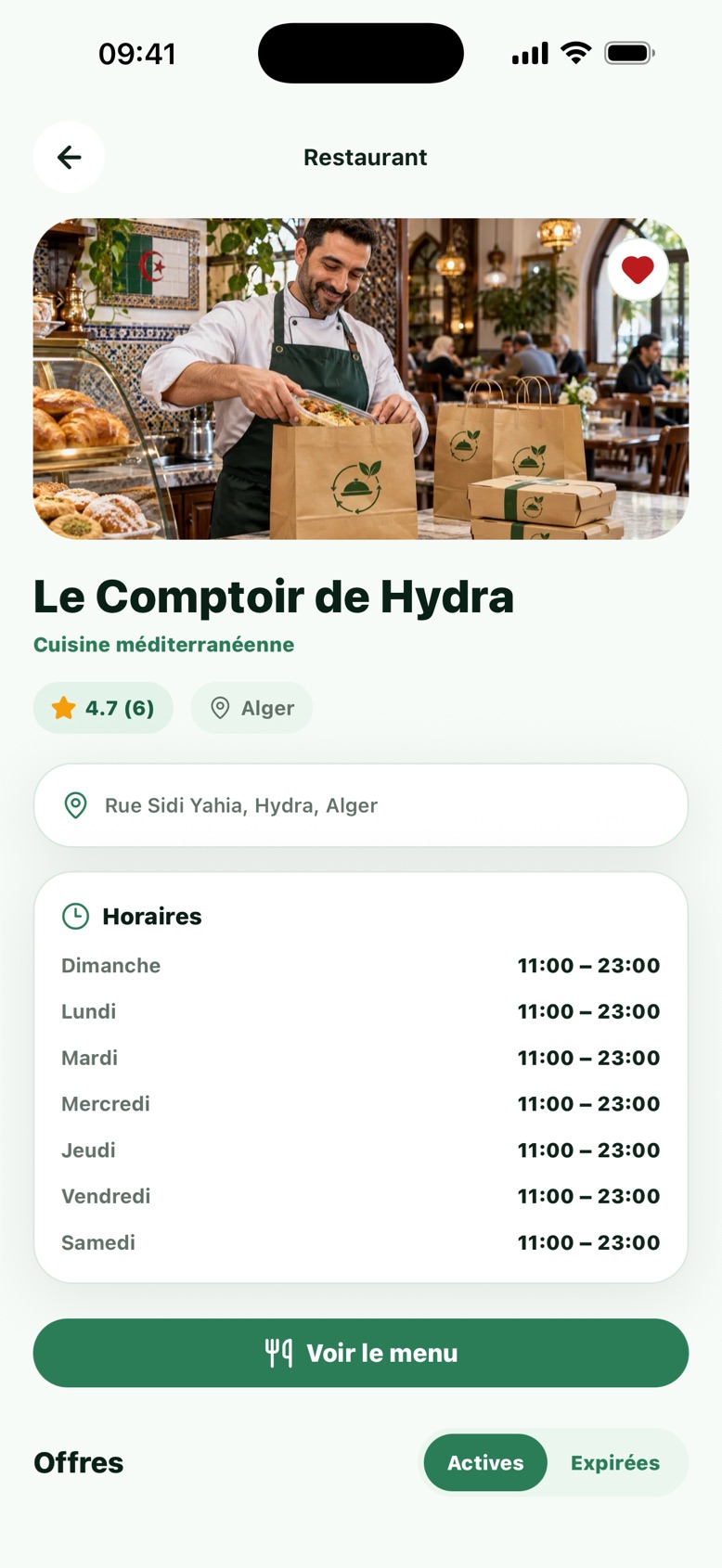
Restaurant page
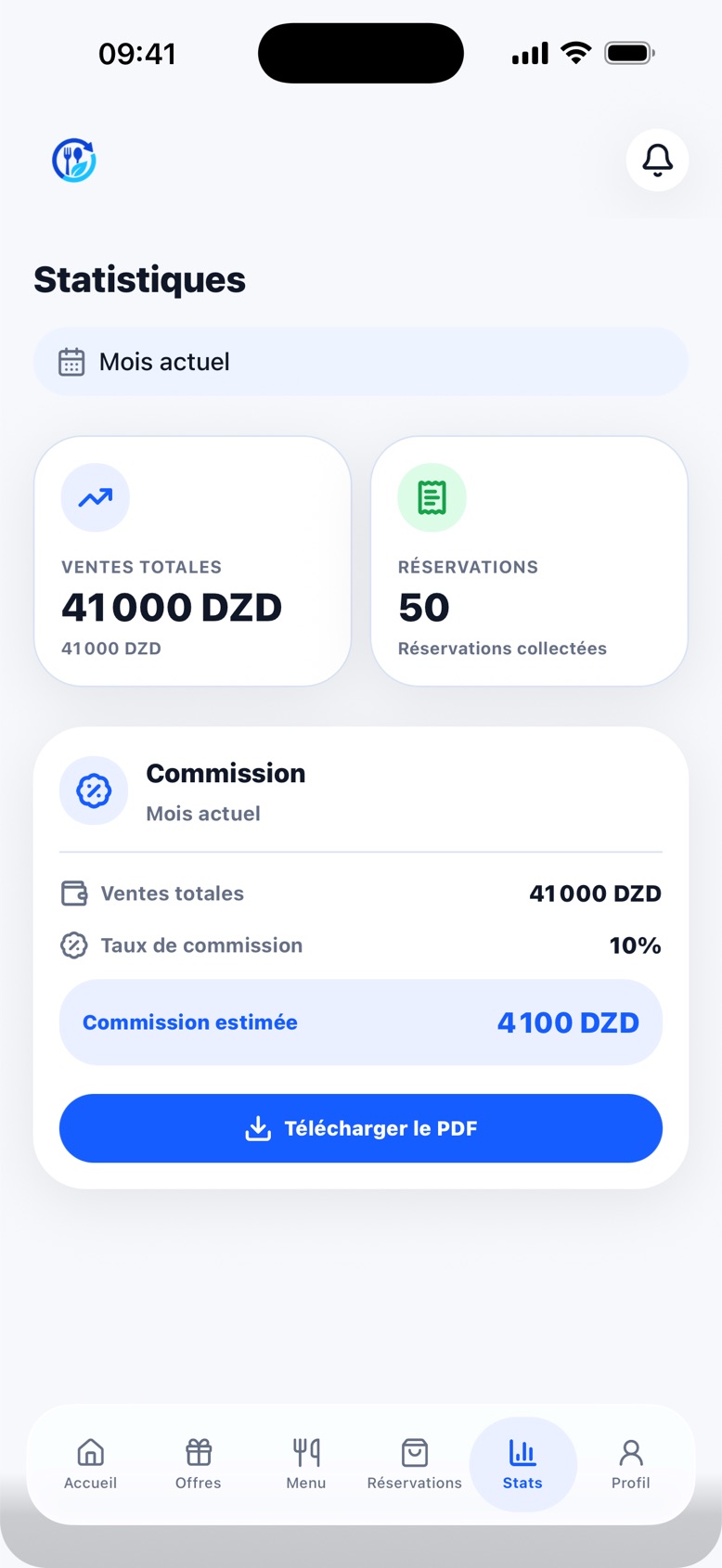
Statistics

Real screens from the two apps, with demo data. © RepasGo

The challenge

A pack has a short life.

A pack is available for a few hours and in small numbers. If a notification comes late, or the same pack is sold twice, or the customer does not come, the shop loses the food and trust in the product. And because people pay in cash at the counter, nothing is collected online: the commission has to be calculated from the packs that were really picked up.

01Small stock, short pickup times
02Cash at the counter, no card payment
03Three languages, with Arabic from right to left

Architecture

Four products, one API.

Every product talks to the same API, so an offer, a reservation or a commission has only one version. The numbers point to the stories below.

ServerDockerCustomer appReact Native · ExpoRestaurant appReact Native · ExpoAdmin dashboardReact · ViteWebsiteReact · TanStack RouterAPINestJS · about 180 routesoffersreservationsmenureviewsloyaltyfinancesupportScheduled jobsPickups · no-shows · commissionsPostgreSQLMain database · DrizzlePush notificationsExpoEmailBrevoREST1156423

Simplified view, based on the code.

In practice

Six problems, and how I solved them.

The problem, what I built, and what it changed.

1

Mobile · the main flow

From a pack in the app to a pack in your hand

The problem
Two people who do not know each other must agree on one thing: this pack is for this customer, and it was picked up.
What I built
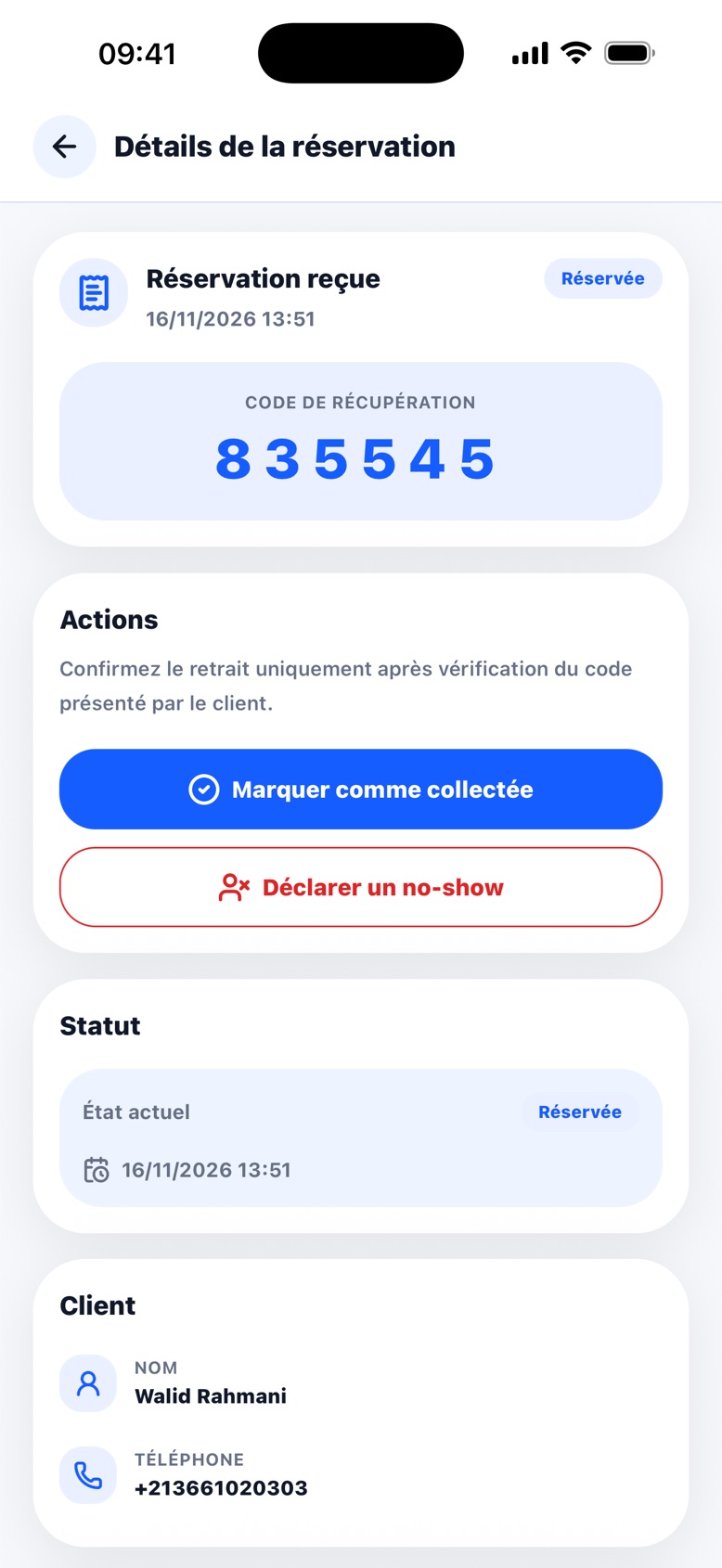
I built the flow in both apps. The customer sees the content, the price and the pickup time before reserving, then gets a 6-digit code. The shop finds the reservation, checks the code and marks it as collected, or reports that nobody came.
What it changed
No card, no printer and no new hardware at the counter: a phone and a code are enough.
  1. Reserve
  2. Get a code
  3. Show it at the counter
  4. Pay in cash
Pack details in the customer app
Reservation with its pickup code
Reservation in the restaurant app
2

Backend · scheduled jobs

Jobs that run once, even with several servers

The problem
Every 15 minutes the API closes finished pickups and applies the no-show rules. Every night it calculates commissions. If a job runs twice, a customer can be blocked by mistake or a commission counted twice.
What I built
I added database locks so that only one server can run each job, and isolated the failures: a problem with one restaurant no longer stops the others. Failed commission jobs are tried again the next day, and every date uses Algerian time.
What it changed
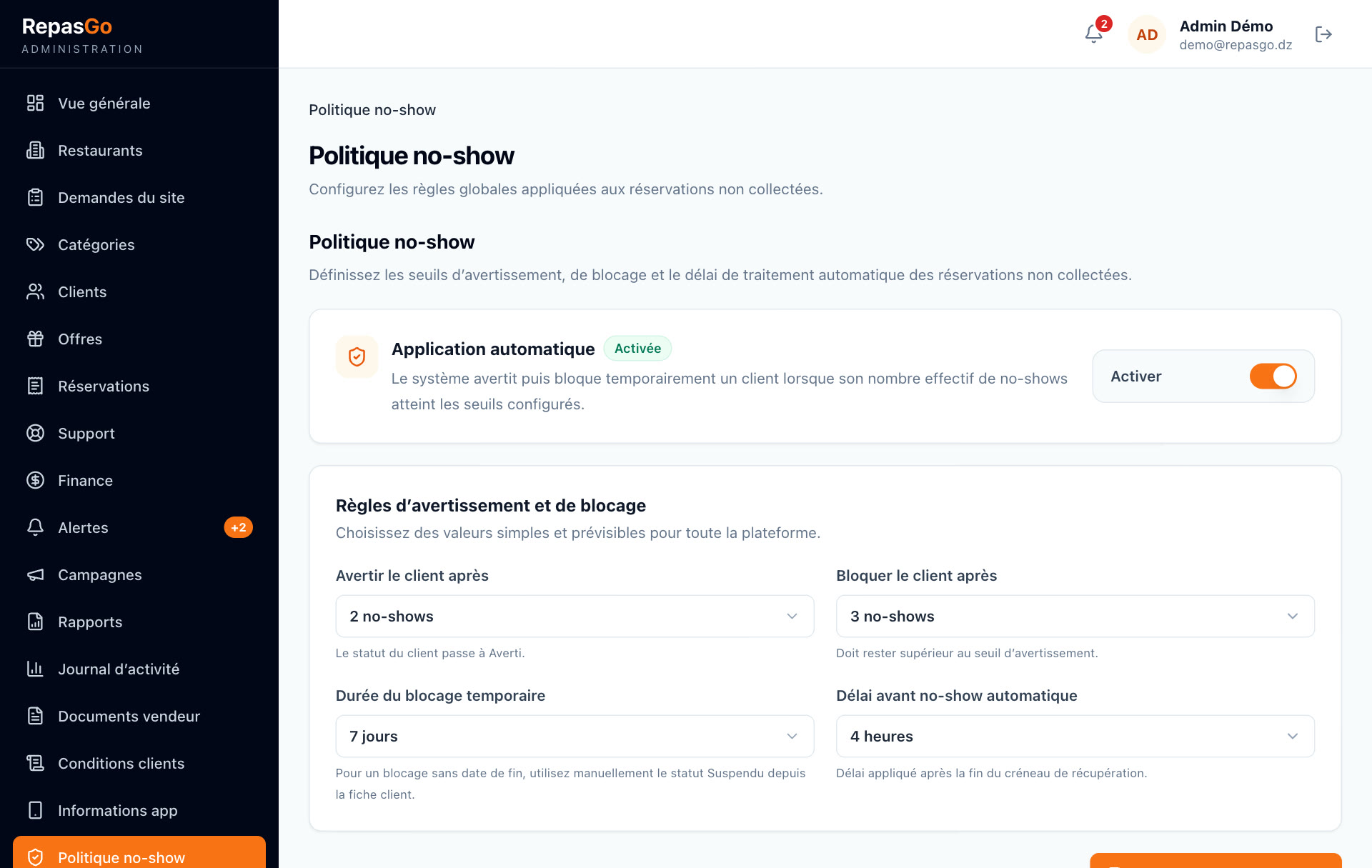
Warnings and temporary blocks are automatic and predictable, and the team can change the rules from the dashboard without a new release.
  1. Job starts
  2. Take the lock
  3. Process one by one
  4. Retry the failures
admin · no-show policy
No-show rules in the admin dashboard
3

Notifications

One event, one notification

The problem
A shop must know about a reservation at once. But the first version could send the same notification twice, or send it to a phone where the user had already signed out.
What I built
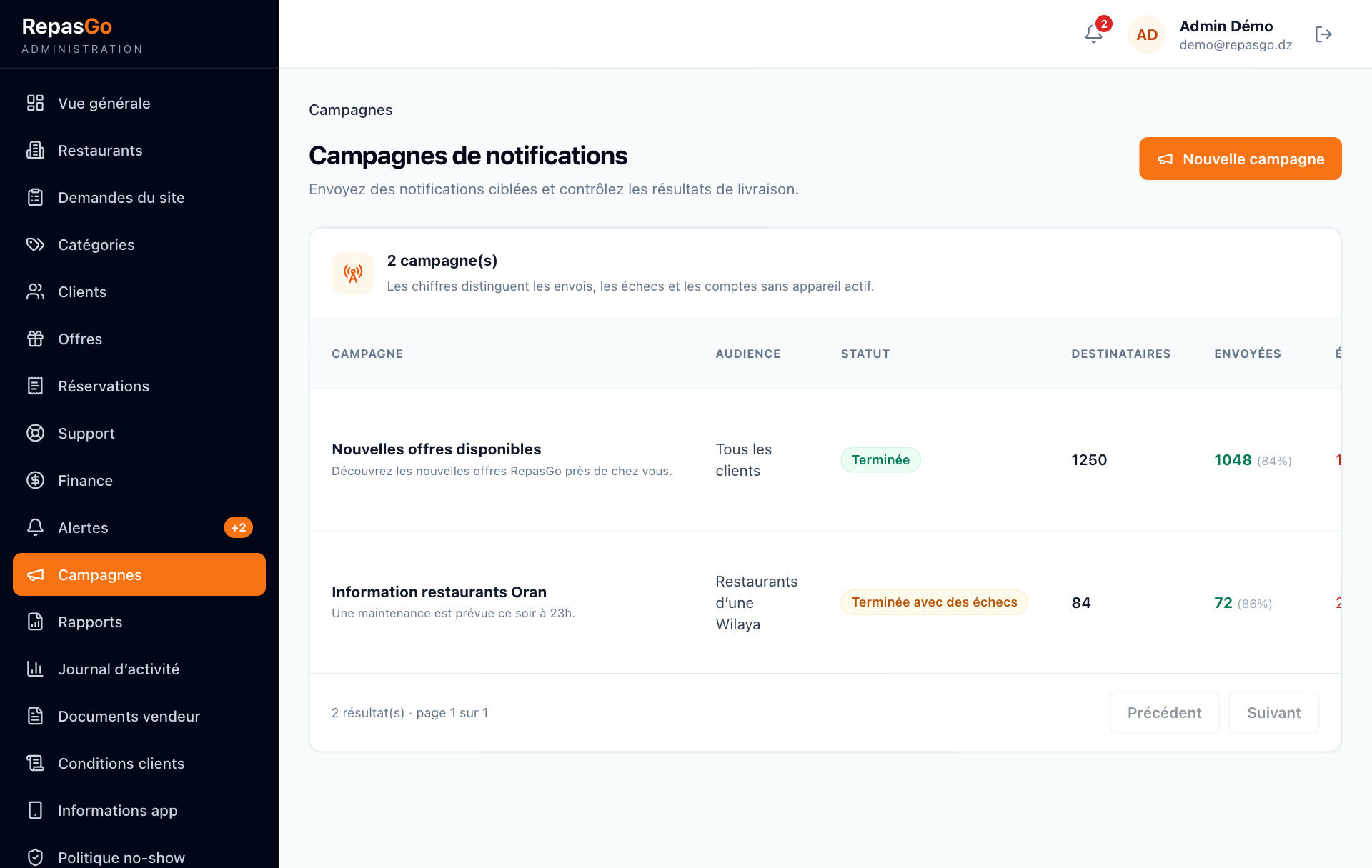
I built the push system: saved notifications, removal of duplicates, sending only to phones with an active session, and a tap that opens the right screen. Important events also go out by email, and admins can send campaigns by city or by audience.
What it changed
Each message arrives once, on the right phone, and the team can see what was sent and what failed.
  1. Event
  2. Remove duplicates
  3. Active phones only
  4. Open the right screen
admin · campaigns
Notification campaigns in the admin dashboard
4

Performance

Finding a pack nearby, on any phone

The problem
The first map loaded the restaurants and filtered them on the phone. Lists grew with every new offer.
What I built
I moved the distance filter to the server, loaded long lists page by page, displayed only the visible rows, and reduced the number of requests in both apps.
What it changed
The phone receives only what is close to the user, and lists stay light as the number of shops grows.
  1. Position
  2. Filter on the server
  3. Short list
  4. Map
Map of shops nearby
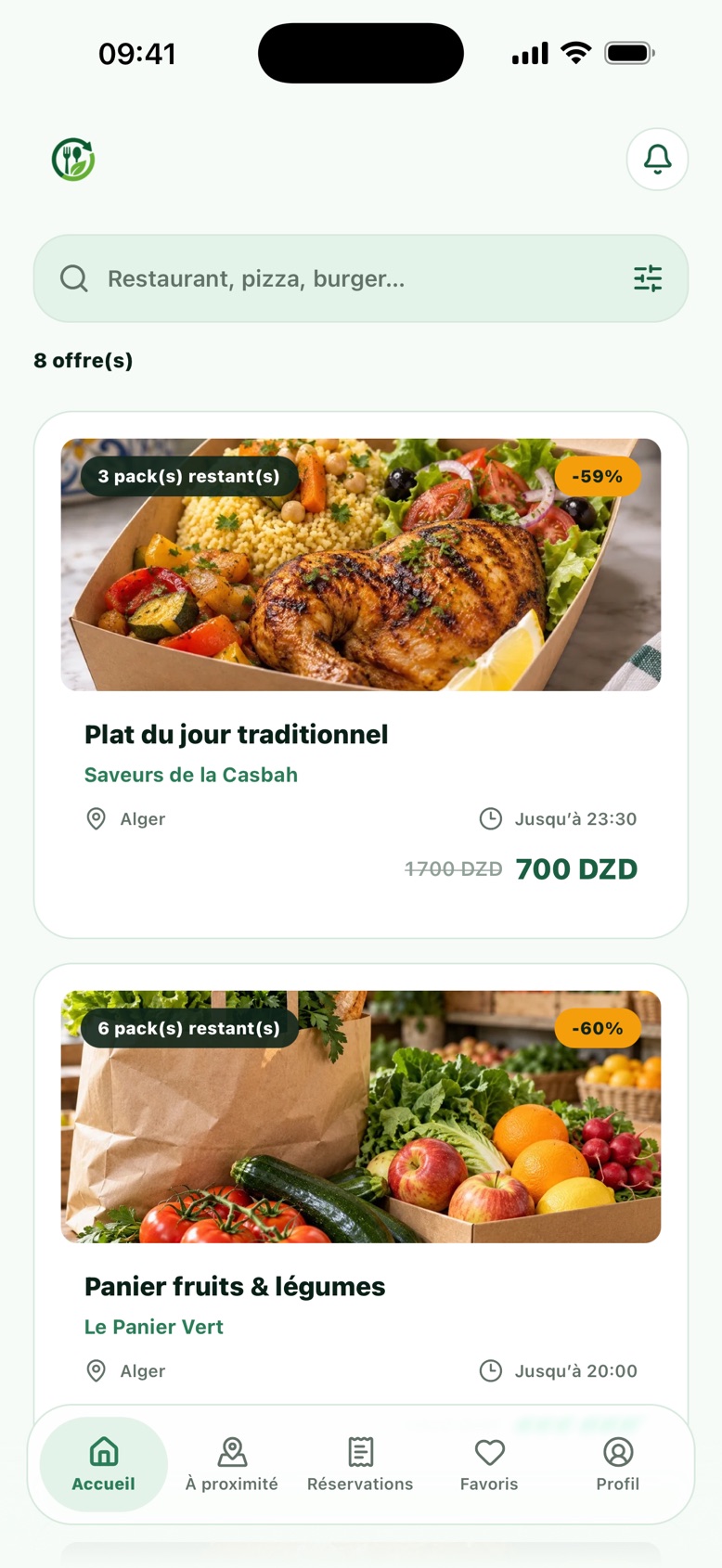
Packs of the day
5

Admin · finance

Commissions without online payment

The problem
Customers pay the shop in cash, so RepasGo never sees the money. The commission has to be calculated and collected afterwards.
What I built
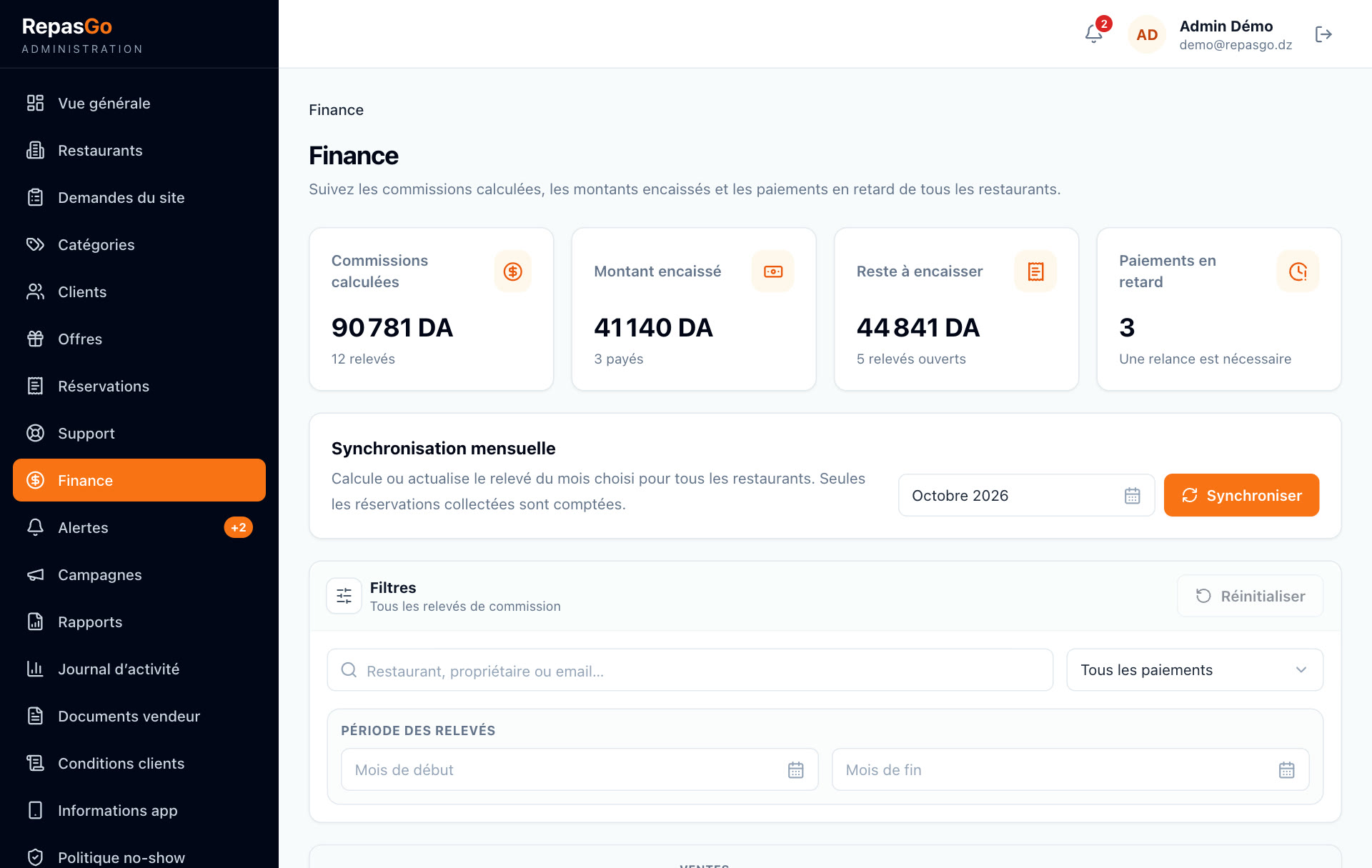
I built the finance part: monthly statements based on collected reservations only, payments, late amounts, exports and reports by restaurant. Shops see the same numbers in their app and can download them as a PDF.
What it changed
Both sides look at the same figures, and the team knows who has paid and who is late.
  1. Collected packs
  2. Monthly statement
  3. PDF and exports
  4. Payments
admin · finance
Finance in the admin dashboard
admin · overview
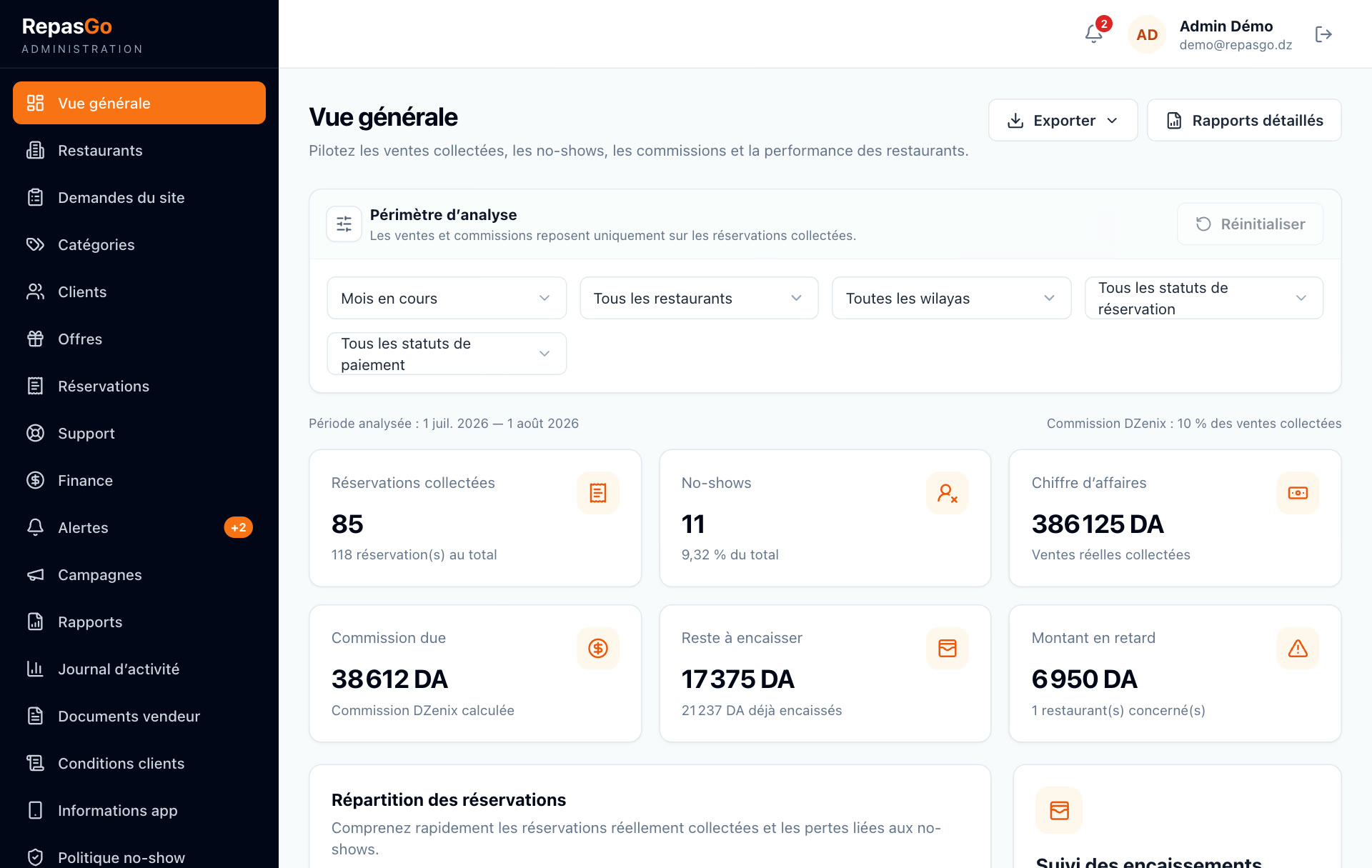
Overview in the admin dashboard
6

Onboarding · web to mobile

From a form on the website to a shop in the app

The problem
A shop owner discovers RepasGo on the website, but the product is in the app. Each step between the two can lose them.
What I built
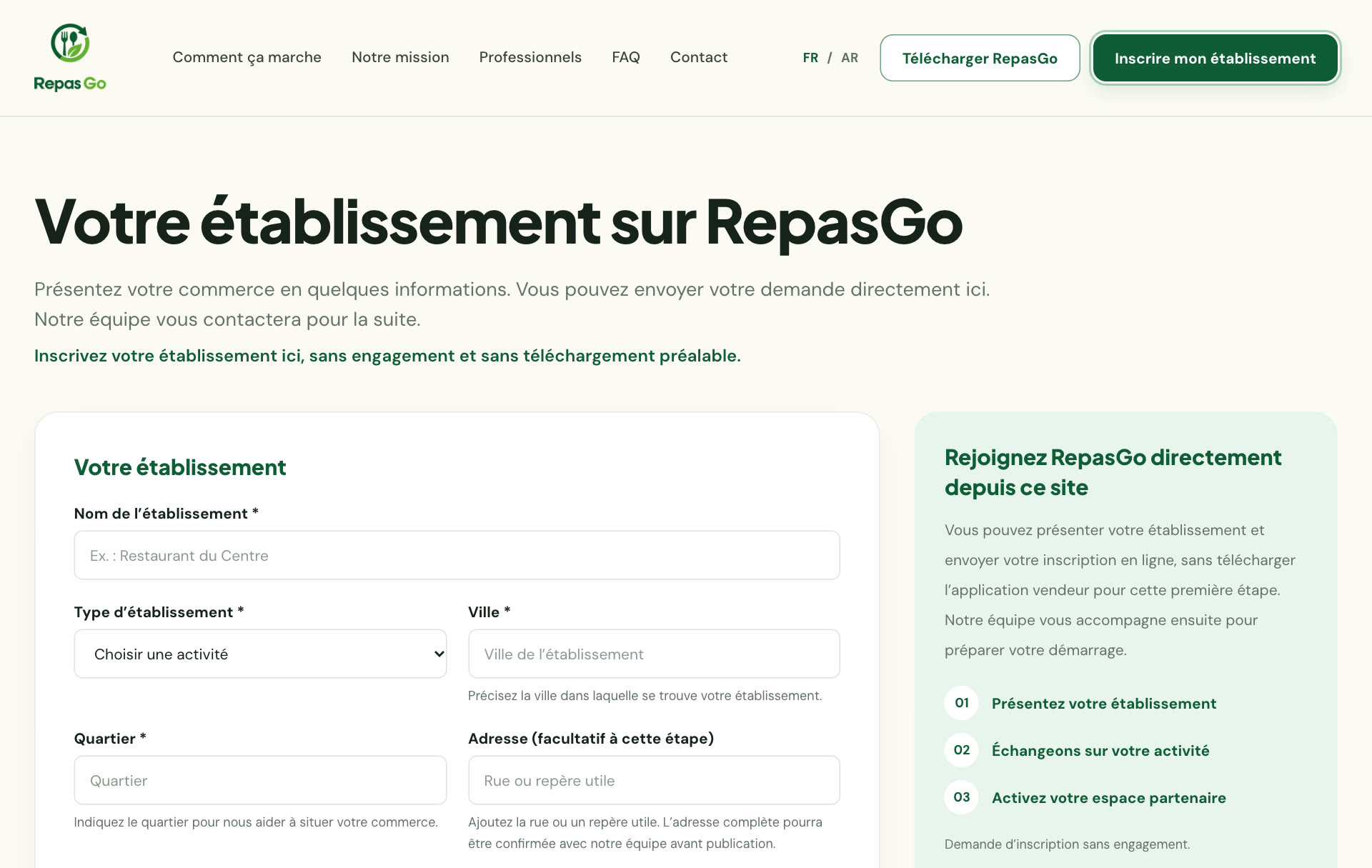
I built the whole path: a form on the website, an alert for the admin, approval with the length of the access, then an email with a QR code. The link opens the restaurant app on the right screen, and the account is activated after the documents are accepted.
What it changed
No account to create by hand and no password to send: the owner goes from the form to the first pack by following one email.
  1. Website form
  2. Admin approval
  3. Email and QR code
  4. App opens
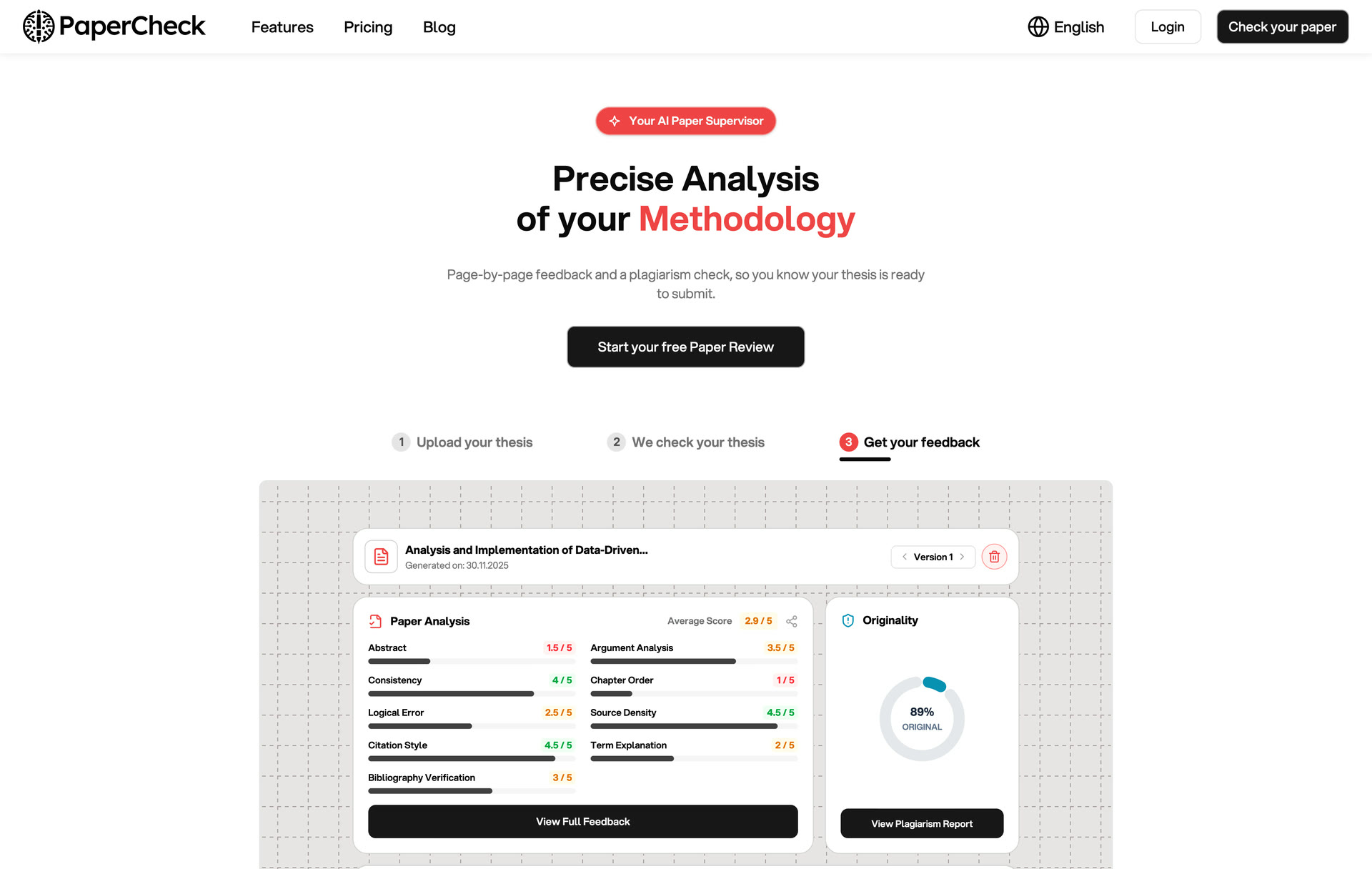
repasgo.com
Registration form on the website
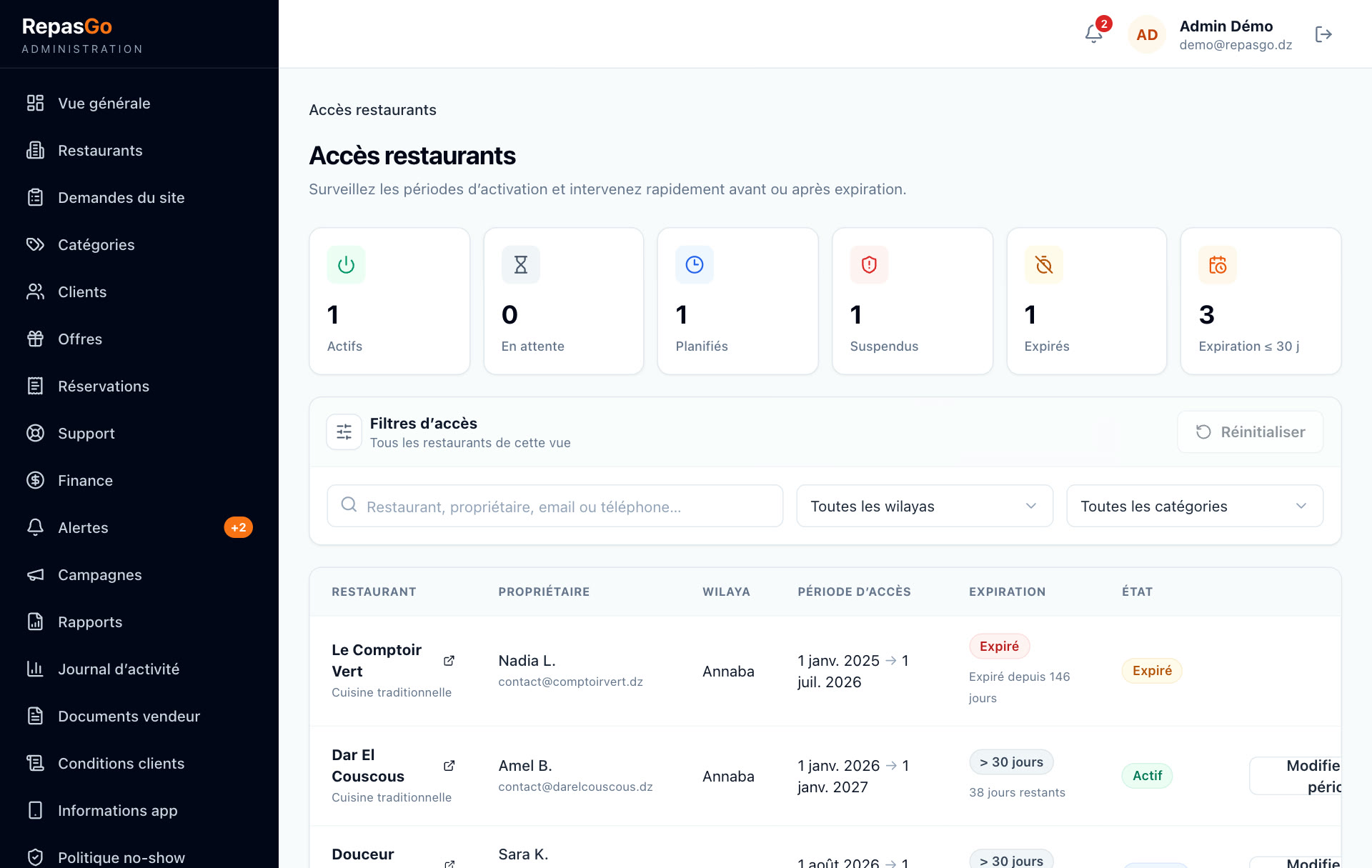
admin · access
Restaurant access in the admin dashboard

Everything I worked on

Customer app

  • Packs of the day with search and filters
  • Map with distance and categories
  • Reservations with a pickup code
  • Order from the menu with a pack
  • Favorites, reviews and sharing
  • Browse without an account

Restaurant app

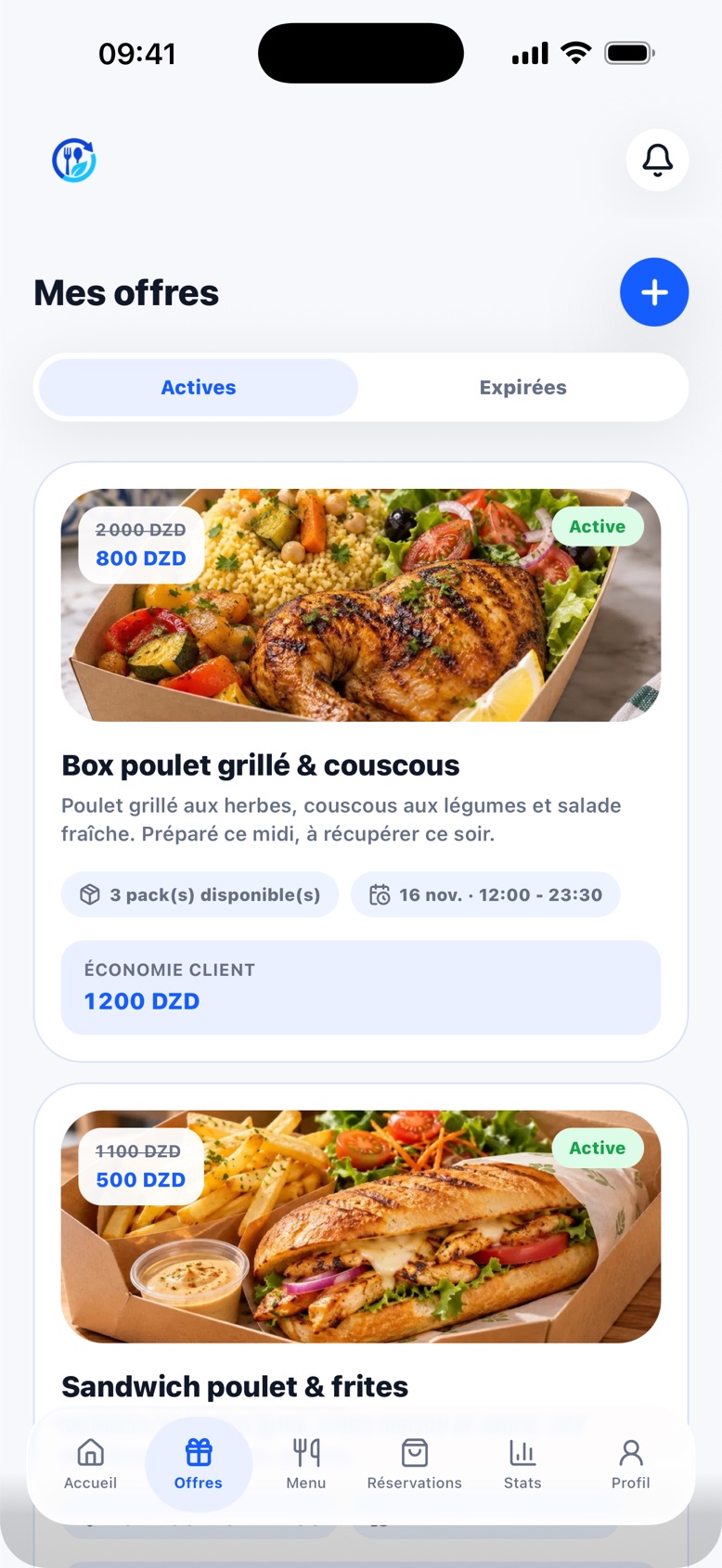
  • Packs with price, quantity and times
  • Menu in French and Arabic
  • Reservations and no-shows
  • Statistics and commission PDF
  • Reviews and replies
  • Opening hours and loyalty points

Backend

  • Push notification system
  • Emails with Brevo
  • Login by email or phone
  • Password reset, account deletion
  • Reviews, support and opening hours
  • Scheduled jobs with locks

Admin dashboard

  • Restaurants, customers and offers
  • Reservations and support tickets
  • Finance, reports and exports
  • Restaurant follow-up (CRM)
  • Campaigns and internal alerts
  • Access periods and reminders

Website

  • Pages for customers and shops
  • French and Arabic
  • Registration form and confirmation
  • Launch alerts by email

Releases and quality

  • App Store builds for both apps
  • Light and dark themes
  • Image checks before upload
  • Automated tests for offers
  • Store screenshots with demo data

Real screens from RepasGo, with demo data. © RepasGo

Timeline

From the first commit to the store.

The main steps, from the Git history and the App Store.

  1. First version

    API, restaurant app and admin dashboard connected.

  2. Daily use

    Reliable notifications, menu orders, legal documents, themes.

  3. Customer app

    On the App Store. Browsing without an account.

  4. Review

    Restaurant app prepared for App Store review.

  5. Restaurant app

    On the App Store. Website and onboarding by email.

Outcome

What I delivered

  • A customer app and a restaurant app in React Native / Expo, both on the App Store
  • Reservations with a 6-digit pickup code, from the pack to the counter
  • An admin dashboard: restaurants, offers, finance, reports, CRM, support and campaigns
  • A push notification and email system without duplicates
  • Scheduled jobs that are safe with several servers: pickups, no-shows and commissions
  • Monthly commissions with statements, payments, exports and PDF
  • Restaurant onboarding: website form, approval, QR code and activation in the app
  • A public website in French and Arabic
Live on the App Store

Where it is today

Both apps are on the App Store and the contract is ongoing. The Android version is being prepared for Google Play.

What I learned

The hardest bugs were not on the screens. They were in time: a pickup that ends at midnight, a job that runs twice, a notification that comes too late.